
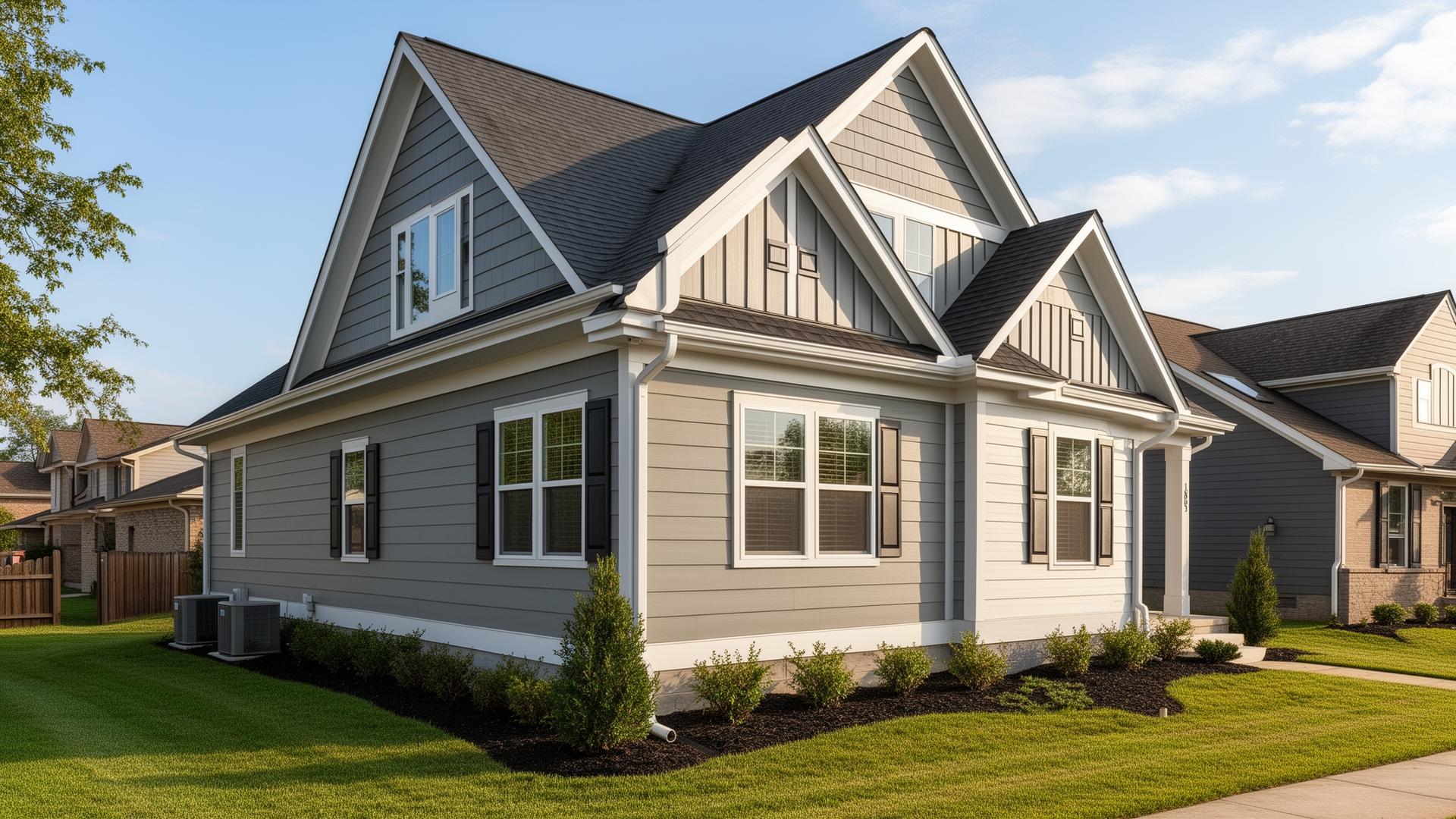
Baltimore County
Exterior Remodeling
Decks, siding, gutters, windows, and trim built for Baltimore County wind, freeze/thaw, and humidity. Get a real exterior estimate with photos and a clear line-item breakdown. No pressure, no spam, no upsell games.
MHIC #144465Financing AvailablePhoto-Backed Estimates
Tell Us About Your Exterior
Request a FREE Exterior Estimate
Describe your project and we'll schedule a convenient time for an on-site consultation. No pressure, no spam, ever.
1,200+ local projects completed
Our Services
What We Build
Deck Construction, Repair & Replacement
New deck builds, structural repairs, code-compliant railings, and full replacements in pressure-treated, composite, and PVC.
Read moreSiding Installation & Replacement
Vinyl, fiber cement, and engineered wood siding with proper housewrap, flashing, and trim detailing.
Read moreSeamless Gutters & Leaf Protection
Custom-formed seamless aluminum gutters, downspouts, and gutter guard systems sized for Baltimore County rainfall.
Read moreWindow Replacement
Double-hung, casement, sliding, bay/bow, and picture windows with proper flashing and energy-efficient glazing.
Read moreExterior Door Replacement
Front entry, sliding patio, French patio, and storm doors with proper threshold flashing and weatherproofing.
Read moreExterior Trim, Fascia & Soffit
Fascia wrap, soffit replacement, and exterior trim restoration — often paired with roofing or siding work.
Read moreExterior Service
Deck Construction, Repair & Replacement in Baltimore County
Decks are one of our most-requested exterior projects in Baltimore County. A large portion of the suburban housing built between the late 1980s and early 2000s came with pressure-treated decks that are now 20–30 years old and reaching end of life — failing ledger flashing, corroded joist hangers, cupped or splintered decking boards, and railings that no longer meet current code.
We build new decks, repair and restore decks where the frame is sound, and replace decks where the structure is too far gone to save. We work in pressure-treated southern yellow pine, cedar, composite (Trex, TimberTech, and similar), and full PVC — and we walk homeowners through honest tradeoffs on lifespan, maintenance, and cost rather than steering toward one product line.
Every deck we build or rebuild is detailed for Baltimore County's freeze/thaw and humidity conditions: properly flashed ledger boards through-bolted to the rim joist, galvanized or stainless joist hangers, blocking at intermediate spans, post bases anchored to footings below frost line, and railings that meet IRC 36-inch height and ≤4-inch sphere baluster spacing.
What's Included
- On-site assessment and structural evaluation of existing framing
- Footings to code (below frost line) with proper post bases
- Ledger board through-bolted and flashed against the house
- Joists, hangers, and blocking sized for the decking material chosen
- Pressure-treated, cedar, composite (Trex/TimberTech), or full PVC decking
- Code-compliant railings, balusters, and graspable handrails on stairs
- Stair stringers, treads, and risers built for the deck height
- Permit application, inspections, and final sign-off through Baltimore County
Typical Timeline
Simple deck repairs typically take 1–2 days. New deck construction usually runs 3–7 days from demo to final inspection, depending on size, height, railing complexity, and whether stairs and landings are involved.
What Drives the Cost
- •Square footage and deck height (taller decks need longer posts and more bracing)
- •Decking material — pressure-treated vs cedar vs composite vs full PVC
- •Railing system (PT pickets, aluminum, cable, glass)
- •Number of stairs, landings, and direction changes
- •Condition of existing framing (full replacement vs deck-board-only refresh)
- •Footing requirements and access for concrete
Material Options
Decking
Pressure-treated is the budget option (15–20 year lifespan in our climate with annual maintenance). Composite and PVC carry 25-year-plus warranties, hold color, and don't need staining — most homeowners replacing an old PT deck step up to composite for the maintenance savings.
Substructure
Framing is almost always pressure-treated lumber sized for the decking load. We use stainless-grade hardware on waterfront and brackish-air properties in Dundalk, Essex, and Middle River where standard galvanized fasteners corrode prematurely.
Railings
Wood pickets are the lowest-cost option but require ongoing maintenance. Aluminum and composite railings are dimensionally stable and low-maintenance. Cable and glass open the view — popular for elevated decks with a sightline worth keeping.
Footings
Most footings in Baltimore County are concrete piers poured below the 30-inch frost line. Helical piles are an option where access is tight or soils are problematic. Low ground-level decks can sometimes use engineered surface mounts, but anything attached to the house gets full footings.
Considerations for Baltimore County Homes
Baltimore County requires a permit for new deck construction and most structural deck repairs — we handle the application, inspections, and final sign-off. The combination of humidity, summer thunderstorms, and 30–50 freeze/thaw cycles per winter is hard on pressure-treated lumber, especially at the ledger board where flashing was skipped on older builds. We routinely find rotted ledgers, undersized fasteners, and missing post bases on 1990s-era decks — and we price the substructure honestly when we find them.
Our Deck Construction, Repair & Replacement Process
-
1
On-Site Assessment
Measure the deck footprint, evaluate existing framing if applicable, and discuss material and railing options.
-
2
Design & Material Selection
Confirm size, height, stair locations, decking material, railing system, and finish details.
-
3
Permit Application
We submit drawings to Baltimore County Permits, Approvals and Inspections and track to issuance.
-
4
Demo & Footings
Remove old structure if applicable, dig footings below frost line, set post bases.
-
5
Framing
Ledger flashed and through-bolted, beams and joists set with proper hangers and blocking.
-
6
Decking & Railings
Decking installed with appropriate fasteners, railings built to IRC code, stairs framed and treaded.
-
7
Inspection & Walkthrough
County final inspection scheduled, then final walkthrough with you for any punch-list items.
Deck Construction, Repair & Replacement FAQs
Exterior Service
Siding Installation & Replacement in Baltimore County
Siding replacement is one of the most visible exterior upgrades a Baltimore County home can get — and one of the most commonly under-installed when homeowners shop on price alone. The siding panels themselves are only part of the system. Housewrap, starter strip, J-channel, flashing at every penetration, and proper integration with windows and doors determine whether the wall stays dry for 20 years or fails at the seams in five.
We install vinyl, fiber cement (Hardie-style boards), and engineered wood siding from mainstream manufacturers including CertainTeed, Alside, Mastic, James Hardie, and LP. We don't hold an exclusive certification with any one brand, and that's deliberate — it means we can recommend what actually fits your house, your budget, and your maintenance preference rather than pushing a single product line.
Most siding replacements in Baltimore County are full tear-offs. Going over existing siding (overlay) saves a day on the install but hides whatever's happening behind the original panels — rotted sheathing, missing housewrap, flashing failures at windows. Tear-off lets us address the wall assembly properly, which is why we recommend it on almost every project.
What's Included
- Tear-off of existing siding and disposal
- Sheathing inspection and repair (rotted OSB or plywood replaced)
- Housewrap installation with proper laps and taped seams
- Window and door flashing — head, jamb, and sill detailing
- Starter strip, J-channel, F-channel, and corner posts
- Siding panels installed to manufacturer specs (proper nail spacing, expansion gaps)
- Soffit, fascia, and trim integration
- Gutter removal and reinstallation as needed
- Final walk-through and warranty paperwork
Typical Timeline
Most single-family siding replacements take 3–5 days from tear-off to final walk-through. Larger homes, two-story projects with significant trim work, and full fiber cement installations may run 5–8 days.
What Drives the Cost
- •Siding material — vinyl vs fiber cement vs engineered wood
- •Square footage of wall area (not floor area)
- •Tear-off and sheathing repair scope
- •Number of windows, doors, and architectural details requiring custom flashing
- •Trim package — fascia wrap, frieze board, corner detailing
- •Insulation upgrades (rigid foam or fanfold added behind new siding)
Material Options
Vinyl Siding
Vinyl is the budget-friendly choice — wide color selection, low maintenance, and a strong warranty profile from major manufacturers. Thicker panels (.044 and up) hold their shape better and resist wind damage in exposed locations. Color is integral to the panel, so it doesn't peel or chip.
Fiber Cement
Fiber cement (the Hardie-style board) is heavier, more durable, and fire-resistant. It holds paint exceptionally well and reads as a more premium finish from the curb. The install is more labor-intensive — proper cutting, fastening, and gap detailing matter — but the lifespan and curb appeal justify the premium for many homeowners.
Engineered Wood
Engineered wood (LP SmartSide is the dominant product) gives you the warmth of a wood look with better dimensional stability than real cedar. It needs paint maintenance over time but is lighter to install than fiber cement and resists impact well.
Wall Assembly
Housewrap is non-negotiable — it's the secondary water barrier behind the siding. Adding rigid foam or fanfold underlayment during a re-side is a smart efficiency upgrade, especially on older Baltimore County homes with under-insulated walls.
Considerations for Baltimore County Homes
Baltimore County's freeze/thaw cycles and summer humidity are hard on caulking, butt-joint trim, and any spot where flashing was skipped. We see siding failures most often at window heads where head flashing was omitted, at the bottom of walls where there's no kick-out flashing at the roof-wall transition, and at penetrations (hose bibs, dryer vents, electrical) that were caulked instead of flashed. Doing the wall assembly right during a re-side is what makes the difference between a 20-year install and a 5-year problem.
Our Siding Installation & Replacement Process
-
1
On-Site Assessment
Walk the home, measure wall area, identify trouble spots, discuss material and color options.
-
2
Material Selection
Confirm siding manufacturer, color, profile, and trim package; place order.
-
3
Tear-Off
Remove existing siding, dispose of debris, inspect sheathing.
-
4
Sheathing & Wrap
Replace any rotted sheathing, install housewrap with proper laps and taped seams.
-
5
Flashing
Install head flashing, jamb flashing, and sill pans at every window and door.
-
6
Siding Install
Starter strip, corner posts, J-channel, then panels installed to manufacturer specs.
-
7
Trim & Cleanup
Fascia wrap, soffit integration, caulking at terminations, final cleanup, walkthrough.
Siding Installation & Replacement FAQs
Exterior Service
Seamless Gutters & Leaf Protection in Baltimore County
Gutters are the most consequential exterior component most homeowners ignore until something goes wrong — usually a leak in a finished basement or rotted fascia at the eaves. Properly sized, properly pitched, properly hung seamless gutters protect the foundation, the siding, the soffit, and the landscaping, and they should last 20+ years with minimal attention.
We install seamless aluminum gutters formed on-site from coil stock, custom-cut to the exact length of each gutter run with no mid-span seams to fail. Sectional gutters (the kind you buy at a big-box store and snap together) have a seam every 10 feet — which is 10 places that will eventually leak. Seamless costs slightly more upfront and saves you years of trouble.
Gutter guard and leaf protection systems are increasingly worth the investment in established Baltimore County neighborhoods with mature oak and maple canopies — Towson, Catonsville, Pikesville, Lutherville-Timonium, Reisterstown. We install micro-mesh, surface tension (reverse curve), foam, and screen-style guards depending on the debris load, roof pitch, and budget.
What's Included
- Tear-off and disposal of existing gutters and downspouts
- Seamless aluminum gutters formed on-site to exact length
- 5-inch or 6-inch K-style profile sized to roof drainage area
- Hidden hangers screwed into the rafter or sub-fascia (no spike-and-ferrule)
- Downspouts sized and placed for proper drainage flow
- End caps, miters, and corners sealed with high-quality gutter sealant
- Splash blocks or downspout extensions to direct water away from the foundation
- Optional gutter guards (micro-mesh, reverse curve, foam, or screen)
Typical Timeline
Most single-family gutter projects complete in 1 day. Larger homes with multiple roof sections, complex returns, or full leaf-protection systems may extend to 2 days.
What Drives the Cost
- •Linear footage of gutter and downspout
- •Profile size — 5-inch K-style vs 6-inch (larger for steep roofs or heavy tree coverage)
- •Material — standard aluminum vs heavier-gauge or copper
- •Number of corners, miters, and downspouts
- •Gutter guard system selected (micro-mesh is the premium option)
- •Fascia repair if rotted boards are uncovered during tear-off
Material Options
Gutter Profile
5-inch K-style is standard for most Baltimore County homes. 6-inch is the upgrade for larger roof areas, steeper pitches, or homes with mature tree canopies that can overwhelm a 5-inch system in a heavy storm. Half-round is a specialty look for historic homes and is priced accordingly.
Gutter Material
Standard .027 aluminum is the value choice and performs well for most homes. Heavy-gauge .032 resists ladder dents and ice damage better — worth it for homes with high foot traffic or heavy ice load. Copper is a premium architectural choice for historic and high-end homes; it patinas naturally over decades.
Leaf Protection
Micro-mesh is the best all-around option for Baltimore County's mixed debris load (oak leaves, maple seeds, pine needles) — fine enough to block small debris while shedding water in heavy rain. Reverse-curve systems work well on certain roof pitches but can overshoot in a downpour. Foam and screen guards are budget options that need periodic cleaning.
Hangers
We install hidden hangers screwed into the rafter or sub-fascia every 24 inches. The old spike-and-ferrule method (a long nail driven through the gutter into the fascia) loosens over time as the wood expands and contracts and is the leading cause of pulled-away gutters on older homes.
Considerations for Baltimore County Homes
Baltimore County's clay-heavy soils don't drain well, which means downspout placement and downspout extensions are critical for protecting foundations — especially in established neighborhoods like Catonsville, Lutherville-Timonium, and Pikesville where mid-century basements were built before modern foundation drainage. We pitch gutters at roughly ¼ inch per 10 linear feet toward downspouts, integrate cleanly with the roof drip edge and starter course, and route water at least 4–6 feet away from the foundation with extensions or buried drains.
Our Seamless Gutters & Leaf Protection Process
-
1
On-Site Measurement
Measure gutter runs, count corners and downspouts, identify any fascia issues.
-
2
Sizing & Layout
Confirm 5-inch vs 6-inch profile based on roof area, tree coverage, and pitch.
-
3
Tear-Off
Remove existing gutters and downspouts; inspect fascia for rot.
-
4
Fascia Repair (if needed)
Replace any rotted fascia boards before hanging new gutters.
-
5
Gutter Forming & Install
Form gutters on-site, hang with hidden hangers, set proper pitch.
-
6
Downspouts & Extensions
Install downspouts, splash blocks, or extensions to direct drainage away from the foundation.
-
7
Leaf Protection (if selected)
Install micro-mesh or selected guard system.
-
8
Final Walkthrough
Test drainage with hose, walk the system with you, confirm pitch and flow.
Seamless Gutters & Leaf Protection FAQs
Exterior Service
Window Replacement in Baltimore County
Window replacement does three things at once: it cuts energy bills, eliminates drafts and cold spots, and dramatically updates a home's appearance from both inside and out. The catch is that the install matters more than the window. A premium window installed without proper flashing, shimming, and insulation at the rough opening will perform worse than a mid-grade window installed correctly.
We replace double-hung, casement, sliding, bay/bow, and picture windows from the major manufacturers — Andersen, Pella, Marvin, ProVia, Simonton, and others. We're material-agnostic, which means we recommend the right window for your house, your climate exposure, and your budget rather than pushing whichever brand has the best contractor incentive that quarter.
For Baltimore County (Climate Zone 4A), we steer homeowners toward ENERGY STAR-certified windows with Low-E coatings and a U-factor of 0.30 or lower. Dual-pane is standard; triple-pane is worth considering on north-facing exposures or for homeowners particularly sensitive to street noise.
What's Included
- Measurement and assessment of every existing window opening
- Removal of existing windows and disposal
- Inspection of rough opening for rot or structural issues
- Sill pan or self-adhered flashing at every opening
- Properly shimmed and squared installation
- Low-expansion foam insulation around the frame perimeter
- Interior and exterior trim integration or reinstallation
- Final caulking and weatherproofing
- Cleanup and haul-away of old windows
Typical Timeline
Most homes with 10–15 windows complete in 1–2 days. Larger projects, full-frame replacements, or specialty windows (bay, bow, custom shapes) extend the schedule accordingly. Lead time on the windows themselves typically runs 4–8 weeks depending on manufacturer and current backlog.
What Drives the Cost
- •Number of windows and average size
- •Window type — double-hung is the value baseline; casement, sliding, bay/bow run higher
- •Frame material — vinyl (lowest cost), fiberglass, composite, wood-clad (premium)
- •Glazing — dual-pane Low-E standard; triple-pane is a meaningful upgrade
- •Full-frame vs insert/retrofit installation
- •Trim work — interior casing, exterior trim and capping
Material Options
Frame Material
Vinyl is the value choice — energy efficient, low maintenance, wide color palette. Fiberglass and composite are dimensionally more stable in temperature swings and hold up better long-term on south and west exposures. Wood-clad is the premium choice for historic homes where the interior wood look matters; pricier and requires occasional finishing.
Glazing
Dual-pane Low-E with argon fill is the standard for Climate Zone 4A and meets ENERGY STAR requirements. Triple-pane adds noticeable noise reduction and slight efficiency gains — worth it on north exposures or for homes near busy roads.
Window Style
Double-hung is the most common residential style in Baltimore County and matches most architectural eras. Casement seals tighter and ventilates better. Bay and bow add interior space and curb appeal. Picture windows are fixed but maximize the view and minimize air infiltration.
Installation Type
Full-frame replaces the entire window unit including the frame and is the right call when the existing frames are rotted or out of square. Insert replacement (retrofitting a new window into the existing frame) is faster, less invasive, and the right choice when the existing frames are sound. We assess on-site and recommend honestly.
Considerations for Baltimore County Homes
Older Baltimore County homes (pre-1970 in Towson, Catonsville, Pikesville, Lutherville-Timonium) frequently have original wood-frame windows with single-pane glass and weight-and-pulley sash mechanisms. The rough openings are often out of square and the sills sometimes show rot, especially on south and west exposures. We inspect every opening before pricing and detail driven-rain exposures with self-adhered flashing at the head and sill — the most common failure point on cheap window installs.
Our Window Replacement Process
-
1
On-Site Measurement
Measure every window opening; note frame condition, sill condition, and trim style.
-
2
Window Selection
Confirm style, frame material, glazing package, color, and grille pattern; place order.
-
3
Removal
Remove existing windows; inspect rough openings for rot or structural issues.
-
4
Flashing Prep
Install sill pan or self-adhered flashing at every opening.
-
5
Window Install
Set, shim, square, and fasten new windows; insulate perimeter with low-expansion foam.
-
6
Trim & Capping
Reinstall or replace interior casing; cap exterior trim with aluminum coil stock if applicable.
-
7
Final Walkthrough
Operate every window with you, confirm seal and lock function, review warranty paperwork.
Window Replacement FAQs
Exterior Service
Exterior Door Replacement in Baltimore County
Exterior doors do more work than any other opening on a house — they're sealed against weather, locked against intrusion, opened thousands of times a year, and expected to look good doing it. A well-installed front entry door dramatically changes a home's curb appeal, and a properly sealed patio door can quietly cut a meaningful share of an HVAC bill.
We install front entry doors in fiberglass (best balance of durability, insulation, and maintenance), steel (security and value), and wood (classic look, more upkeep). We install sliding and French patio doors from the major manufacturers and storm doors as add-ons or replacements.
The install detail that separates a 25-year door from a 5-year problem is the threshold and head flashing. Water gets driven against the head of an entry door in a Baltimore County thunderstorm; if it's not flashed properly, it gets behind the casing and into the framing. We pan-flash the threshold and detail the head before the door goes in — every time.
What's Included
- Removal of existing door and disposal
- Inspection of rough opening, framing, and subfloor at threshold
- Sill pan or self-adhered flashing at threshold
- Head flashing integrated with siding or housewrap
- Properly shimmed and squared door installation
- Lockset, deadbolt, and weatherstripping installation
- Interior and exterior trim integration
- Storm door install as add-on (optional)
- Final cleanup and walkthrough
Typical Timeline
Most single-door replacements complete in a half-day to one day. Patio door replacements (sliding or French) typically take a full day. Lead time on the door itself runs 2–6 weeks depending on manufacturer and customization.
What Drives the Cost
- •Door type — entry, patio sliding, patio French, storm
- •Material — fiberglass, steel, wood
- •Glass options — full lite, half lite, sidelights, transom
- •Hardware tier — standard vs premium locksets and deadbolts
- •Trim and casing replacement scope
- •Storm door add-on
Material Options
Entry Door Material
Fiberglass is our most-recommended material — best insulation, won't rust or warp, holds paint or stain well, and modern fiberglass realistically mimics wood grain. Steel offers the best security at a lower price point but can dent and shows wear at the bottom faster. Solid wood is the premium aesthetic choice but requires periodic refinishing in our climate.
Patio Door Style
Sliding patio doors are the value choice — efficient use of space, clean look, fewer moving parts. French (hinged) doors give a more architectural look and full opening width but require swing clearance. Multi-slide (telescoping) systems are a premium option for opening up large spans to a deck or patio.
Storm Doors
A storm door extends the life of an entry door by buffering it from direct sun and weather. Full-view glass maximizes light and curb appeal. Retractable-screen models give you year-round flexibility — glass in winter, screen in summer.
Glass Options
Glass adds light and curb appeal but reduces insulation slightly compared to a solid door. Sidelights and transoms give the entry presence without compromising the door itself. Decorative glass options let you balance privacy with light.
Considerations for Baltimore County Homes
Baltimore County's wind-driven rain — particularly out of the northeast during nor'easters and thunderstorms — drives water hard against entry-door heads and patio-door thresholds on exposed elevations. We pan-flash every threshold and detail the head with self-adhered flashing or a proper drip cap before the door goes in. South and west exposures take the most UV and need fiberglass or quality wood with proper finish to hold up over time.
Our Exterior Door Replacement Process
-
1
On-Site Assessment
Measure rough opening, evaluate existing trim and framing, discuss style and material options.
-
2
Door Selection
Confirm door style, material, glass, finish, hardware, and storm door if applicable; place order.
-
3
Removal
Remove existing door, frame, and threshold; inspect framing and subfloor for rot.
-
4
Flashing Prep
Install sill pan at threshold and head flashing integrated with the wall assembly.
-
5
Door Install
Set, shim, square, and fasten new door; install lockset and weatherstripping.
-
6
Trim & Finish
Install interior casing, exterior trim, caulk all transitions, paint or stain as scoped.
-
7
Final Walkthrough
Operate door with you, test lockset and deadbolt, confirm seal.
Exterior Door Replacement FAQs
Exterior Service
Exterior Trim, Fascia & Soffit in Baltimore County
Fascia and soffit do quiet, critical work — covering the rafter ends, supporting the gutters, and ventilating the attic. When they fail, the failure is usually obvious from the ground (peeling paint, sagging boards, daylight visible at the eaves) and the underlying cause is almost always water — gutter overflow, missing drip edge, ice damming, or simple paint maintenance gone too long.
We replace rotted fascia, repair damaged soffit, install aluminum or PVC fascia wrap to eliminate the maintenance cycle, and detail the eaves to support proper attic ventilation. This work pairs naturally with roofing replacement (drip edge and starter course meet the fascia) and with siding replacement (corner posts, frieze boards, and trim packages tie into the soffit).
Attic ventilation is the part most homeowners don't think about until they have ice damming or premature shingle failure. Soffit vents (intake) paired with ridge vents (exhaust) create the balanced airflow that keeps an attic dry in winter and reduces summer heat load — and proper soffit detailing during a re-fascia is when we get this right.
What's Included
- Inspection of existing fascia, soffit, and rafter ends
- Removal and disposal of rotted or damaged boards
- Replacement of underlying wood fascia or rafter tails as needed
- Aluminum or PVC fascia wrap installed over wood substrate
- Vinyl or aluminum soffit panels — vented or solid as appropriate
- Frieze board and trim integration
- Soffit ventilation sized to match ridge vent (balanced airflow)
- Gutter removal and reinstallation as needed
- Final caulking and walkthrough
Typical Timeline
Most fascia and soffit projects complete in 1–3 days depending on linear footage, height, and the extent of underlying wood replacement. Pairing this work with a roof or siding project usually shortens the overall schedule by avoiding a second mobilization.
What Drives the Cost
- •Linear footage of fascia and soffit
- •Material — aluminum wrap (most common), PVC, painted wood
- •Extent of rotted wood requiring replacement before wrap
- •Two-story or three-story access
- •Soffit ventilation upgrades (adding vented soffit panels for attic airflow)
- •Gutter removal and reinstallation
Material Options
Fascia Wrap
Aluminum wrap is the most popular choice — bent on-site to wrap the fascia board, eliminates the paint maintenance cycle, comes in a wide color palette to match siding and trim. PVC trim is a premium alternative that's dimensionally stable and paint-friendly. Painted wood is the historic look but requires a paint cycle every 5–7 years.
Soffit
Vented vinyl or aluminum soffit panels are the standard — they provide continuous intake ventilation along the entire eave when paired with a ridge vent. Solid panels with separate intake vents work but are less efficient. Match the soffit color to your trim package.
Trim Profiles
Most homes get a clean fascia wrap with a frieze board where the soffit meets the wall. Older Baltimore County homes — particularly Catonsville Victorians and Towson colonials — sometimes call for custom profiles or crown molding details to preserve the architectural character.
Considerations for Baltimore County Homes
Older Baltimore County homes very commonly show fascia and soffit rot at the eaves — usually traced back to gutter overflow, missing or improperly installed drip edge, or ice damming. We address the underlying cause (gutters, drip edge, attic ventilation) at the same time, otherwise new wrap will hide problems that come back. Balanced soffit-to-ridge ventilation is critical for roof longevity in our humid climate; we size soffit vents to match the ridge vent capacity during the project.
Our Exterior Trim, Fascia & Soffit Process
-
1
On-Site Inspection
Walk the eaves, identify rot and ventilation issues, measure linear footage.
-
2
Material Selection
Choose fascia wrap material and color, soffit panel style, and trim profile.
-
3
Gutter Removal
Remove existing gutters to access fascia.
-
4
Wood Repair
Replace any rotted fascia or rafter tails before installing new wrap.
-
5
Soffit Install
Install vinyl or aluminum soffit panels with proper ventilation.
-
6
Fascia Wrap
Bend and install aluminum coil stock or PVC over the wood fascia.
-
7
Gutter Reinstallation
Hang gutters back onto the new fascia with hidden hangers.
-
8
Final Walkthrough
Confirm clean lines, proper ventilation, and watertight terminations.
Exterior Trim, Fascia & Soffit FAQs
Ready to Upgrade Your Home's Exterior?
Photo-backed estimates, unbiased material recommendations, and local crews who do the work themselves.
Why Choose Us
Our Promise to You
Licensed & Insured
Maryland Home Improvement Contractor License MHIC# 144465. Full liability and workers' compensation coverage on every project.
Unbiased Material Recommendations
We're not locked into one manufacturer. We help you choose the right siding, window, decking, or door for your house, your budget, and your maintenance preference — not the brand with the best contractor incentive.
Factory-Trained Installation Crews
Our crews are trained on the products we install — proper fastening, flashing, and detailing per manufacturer specs. Install quality is what makes a 25-year warranty actually mean something.
Photo-Backed Estimates
We document conditions on-site with photos so the proposal reflects what's actually there — and so you can see what we're seeing. No surprise change orders for known conditions.
Code-Compliant Detailing
Proper flashing at every penetration, ledger boards through-bolted and flashed, sill pans at every threshold, balanced soffit-to-ridge ventilation. The details that separate a 5-year install from a 25-year one.
Clean Job Sites & Respectful Crews
Tarps over landscaping, magnetic nail sweep after siding and gutter work, daily debris cleanup. We treat your property like we'd want ours treated.
Manufacturer-Matched Warranties
Workmanship warranty in writing from us; manufacturer warranties on the products we install pass through to you. Documentation provided at project close-out.
Local Crews, Local Knowledge
We work in Baltimore County every day. We know which neighborhoods need stainless deck hardware, which need 6-inch gutters under the oak canopy, and which require HOA architectural review.
Local Expertise
Baltimore County Climate & Exterior Wear
Exterior remodeling in this region is a different conversation than in a milder or drier climate. Here's what we plan for on every project — and why local experience matters when choosing materials and details.
Freeze/Thaw Cycles
Baltimore County typically sees 30–50 freeze/thaw cycles each winter. Caulking, butt joints, flashing, and decking fasteners take the brunt of it — which is why detailing matters more than the headline material spec.
Humidity & Driven Rain
Summer humidity and wind-driven thunderstorms push water against window heads, door thresholds, and siding seams. Housewrap, sill pans, head flashing, and proper drip-edge integration are non-negotiable on every wall assembly.
Wind Exposure (Geography Matters)
Waterfront and peninsula communities — Dundalk, Essex, Middle River — see sustained winds that demand higher-spec siding and stainless deck hardware. Inland established suburbs like Towson and Catonsville sit more protected.
Sun & UV Exposure
South and west elevations take the most UV damage in Baltimore County. Paint fades, vinyl chalks faster, and wood doors and trim need quality finish. Material choice on those exposures is a different conversation than north and east faces.
Mature Tree Canopy
Established suburbs (Towson, Catonsville, Pikesville, Lutherville-Timonium, Reisterstown) sit under heavy oak and maple coverage. Gutter sizing, leaf protection, and shaded north slopes that grow algae are real planning factors.
Clay-Heavy Soils & Drainage
Baltimore County's clay soils don't drain well, which puts extra weight on gutter sizing and downspout placement. Routing water away from the foundation is part of every gutter and exterior project we scope.
Coordinating exterior work with roofing or interior remodeling? We can scope and schedule the full project under one contract and one project lead.
Local Coverage
Exterior Remodeling Across Baltimore County
Decks, siding, gutters, windows, doors, and trim work in all 15 cities we serve across Baltimore County.
Local Coverage
We Serve All of Baltimore County
Towson
On Rodgers Forge and Stoneleigh rowhomes, the leak you can't trace is almost al…
Catonsville
Heavy oak canopy and limestone-filler shingles produce the streaked, prematurel…
Parkville
Most 1940s-60s ramblers and Cape Cods were built without continuous ridge venti…
Perry Hall
Cross-gabled colonials in Honeygo and Perry Hall Farms have so many roof-to-wal…
Dundalk
Sustained Patapsco wind exposure on Turners Station and St. Helena blocks is wh…
Essex
Back River humidity and aggressive ice damming on north slopes drive water unde…
Lutherville-Timonium
Larger custom homes with complex rooflines, multiple valleys, and tall chimneys…
Pikesville
Mature canopy across Sudbrook and Old Pikesville plus a mix of pre-war stone ho…
Owings Mills
Planned-community HOAs and matching color requirements make Owings Mills replac…
Randallstown
Mid-century ranchers and 1970s splits across Randallstown share the same weak p…
Middle River
Open waterfront exposure and 1950s post-war framing mean wind-rated assemblies…
Reisterstown
Historic Main Street homes and newer surrounding subdivisions need very differe…
White Marsh
Most 1990s-2000s tract homes in White Marsh came with builder-grade 3-tab and m…
Nottingham
Townhome clusters in Nottingham require coordinated tear-offs and matched shing…
Arbutus
Bungalows near UMBC have steep pitches, old step flashing into brick chimneys,…
Common Questions
Exterior Remodeling FAQs
Permit-related questions? See the Baltimore County Department of Permits, Approvals and Inspections.
Ready to Get Started?
Contact us today for a free, no-obligation estimate. Licensed, insured, and ready to work.