
Roofing in
Essex, MD
Get a real Essex roof estimate in 60 seconds. Photos of your roof, clear line-item pricing. No salesperson. No obligation.
MHIC #144465Financing AvailableInstant Estimates
5/5
Google Reviews
< 24 hours
Response Time
1200+
Projects Completed
#144465
MHIC License
Local Expertise
Why Essex Homes Need Specialized Roofing
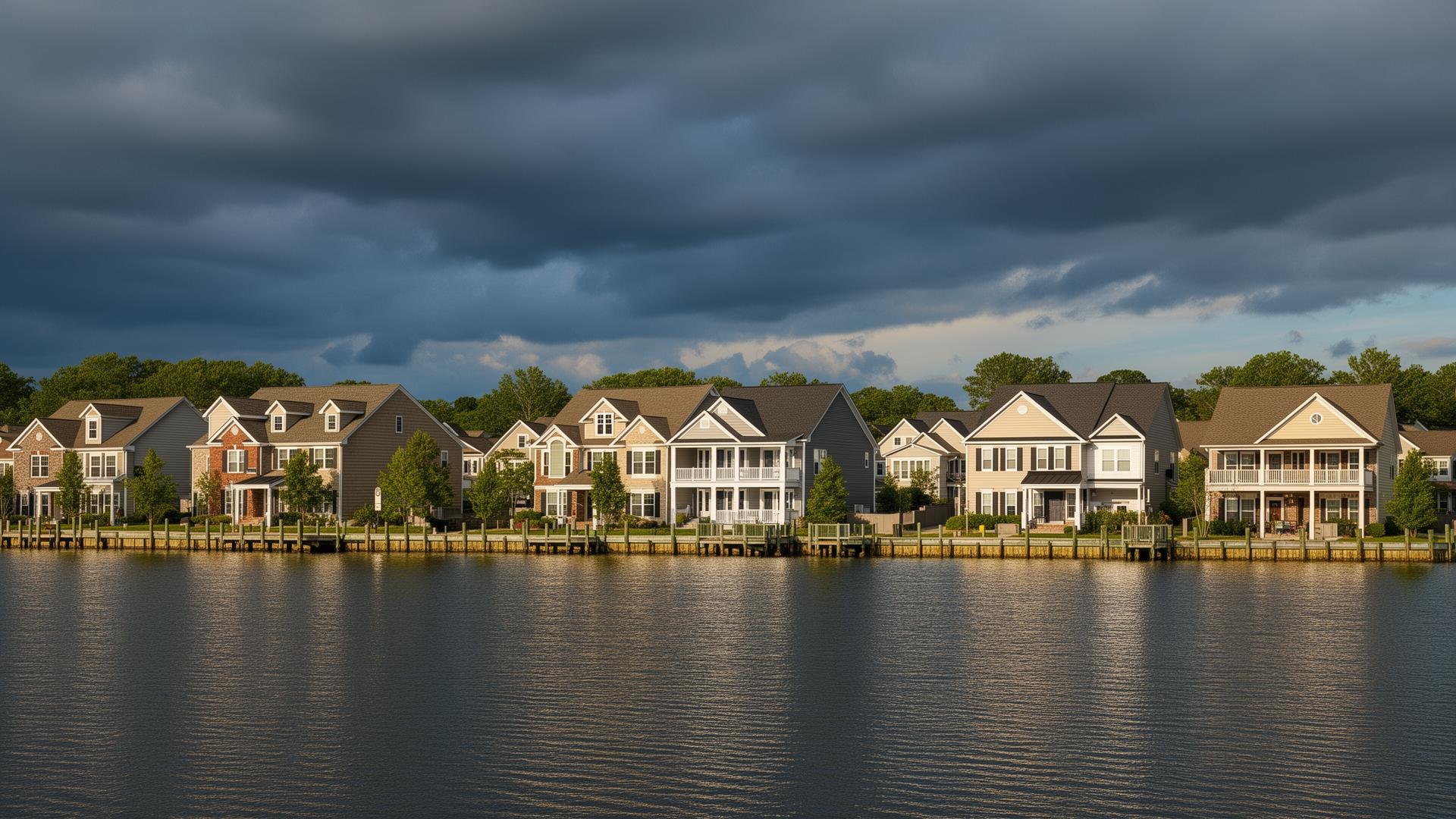
Essex is a small-town peninsula community along the Back River, with a housing mix that runs from older 1940s–1950s frame and brick homes in Rocky Point, Mars Estates, and Hawthorne to newer waterfront construction in Hopewell Pointe and Back River Neck. The marina culture along the Back River and Middle River shoreline shapes the area's character but doesn't drive coastal wind exposure the way Dundalk's open-Patapsco blocks do — Essex's water exposure is more about persistent humidity than sustained wind loading.
The local failure pattern reflects that humidity. North-facing slopes stay damp longer than they should and accumulate ice in the freeze-thaw cycle, especially on older homes with minimal attic insulation and unbalanced ventilation. Original 5-inch gutters and undersized downspouts can't handle the runoff from converted attics or finished second floors, and the absence of kickout flashing where a roof slope dies into a sidewall sends rainwater straight down behind the wall siding. We address all three: ice and water shield extended well past the code minimum on north exposures, oversized 6-inch K-style gutters with adequately-sized downspouts, and proper kickout flashing detailing at every roof-to-wall return.
Ice Damming on North-Facing Slopes
Back River humidity keeps north slopes damp through freeze-thaw cycles, producing aggressive ice dams that back up under the shingle line. We install ice and water shield well past the IRC minimum — at least three feet up-roof and into every valley.
Missing Kickout Flashing
Where a roof slope dies into a sidewall, the absence of a kickout flashing sends rainwater straight down behind the siding, rotting the sheathing and framing inside the wall. We add a fabricated kickout at every roof-to-wall return on every Essex re-roof.
Undersized Gutters & Downspouts
Many older Essex homes still have original 5-inch K-style gutters and 2x3 downspouts that can't handle the runoff from a steeper or larger roof. We upsize to 6-inch gutters with 3x4 downspouts so water moves away from the eave instead of overshooting it.
Unbalanced Attic Ventilation
Without balanced soffit-to-ridge ventilation, warm interior air condenses on the underside of the roof deck and feeds the ice-dam cycle. We add continuous soffit vents and a ridge vent to break the cycle and keep the deck temperature consistent with the outside air.
Coverage
Neighborhoods We Serve in Essex
ZIP Codes Served: 21221
Local Services
Our Services in Essex
Our Baltimore County roofing crews handle everything from step-flashing rebuilds to full replacements for Essex homes — alongside exterior and interior remodeling for the full project.
Ice Dam Prevention & Roof Replacement
Essex's Back River microclimate makes ice damming the dominant winter roof problem. Every replacement here gets ice and water shield well past the code minimum on north and east slopes, balanced soffit-to-ridge ventilation, and kickout flashing at every wall return — the combination that actually stops ice dams instead of treating their symptoms.
What this looks like in Essex
A typical Essex replacement includes full tear-off, deck repair, ice and water shield extended at least three feet up-roof at eaves (more on north slopes), full coverage in valleys, synthetic underlayment, drip edge, kickout flashing at every roof-to-wall return, architectural shingles, and added soffit-to-ridge ventilation. Most homes complete in one to two days.
Gutter Replacement & Drainage
Original 5-inch gutters on Rocky Point and Mars Estates homes overflow during the kind of rainstorms Essex regularly sees. We replace with seamless 6-inch K-style aluminum and properly sized downspouts so water moves where it should — away from the foundation, not over the front of the gutter.
What this looks like in Essex
A typical Essex gutter replacement includes removal of the existing system, installation of seamless 6-inch K-style aluminum gutters with 3x4 downspouts, leaf protection where tree cover warrants it, and proper pitch to the downspout outlets. We coordinate the work with roof replacement so the drip edge integrates cleanly into the new gutter.
Roof Repair & Leak Tracing
On an Essex home, a leak inside the wall is often a missing kickout flashing — not a roof problem at all. We trace water paths from the entry point back to the actual failure and fix the cause, not the surface symptom.
What this looks like in Essex
A typical Essex repair starts with a photo-backed inspection of every roof-to-wall return, valley, and penetration on the affected slope. We isolate the entry point — frequently a missing kickout or a lifted ice-and-water-shield seam — and rebuild the failed detail with matched materials.
Exterior Remodeling
Essex's humidity is hard on wood trim, fascia, and soffit. We replace with aluminum-wrapped or pre-finished materials that don't rot, and we coordinate this with roof and gutter work so the eave is detailed once and stays sealed.
What this looks like in Essex
Typical Essex exterior projects include aluminum fascia and soffit wrap with continuous soffit vents, vinyl or fiber-cement siding replacement where moisture has rotted the original, and trim repair around windows and doors where flashing has failed. We sequence this with roof and gutter work so the assembly comes together as one system.
FAQs
Essex Roofing FAQs
What's an ice dam and why does my Rocky Point house get them every winter?
An ice dam forms when warm interior air leaks into the attic, melts snow at the upper portion of the roof, and the runoff refreezes at the cold eave. The ice dam then backs water up under the shingle line. Essex homes get them aggressively because Back River humidity slows roof drying and many older homes have minimal attic insulation and unbalanced ventilation. The fix is more ice and water shield, balanced soffit-to-ridge ventilation, and air-sealing at the attic floor.
What is kickout flashing and does my Mars Estates home have it?
Kickout flashing is a small fabricated metal piece installed at the bottom of a roof slope where it meets a sidewall. It diverts rainwater out into the gutter instead of letting it run straight down behind the siding. Most older Essex homes were built without it, and the absence shows up as rotted sheathing inside the wall directly below that point. We add a kickout at every roof-to-wall return as part of any replacement.
Will replacing my gutters actually fix my basement water problem?
Often, yes — at least the part of it caused by overshoot at the eave. Original 5-inch gutters with 2x3 downspouts on a typical Essex roof simply can't move the water from a heavy storm. Upsizing to 6-inch gutters with 3x4 downspouts and routing them at least four feet from the foundation handles the volume and the discharge point. It's not a substitute for proper grading, but it's usually a meaningful piece of the fix.
Do I need heat cables on my Essex roof?
Heat cables are a treatment, not a prevention — they melt the ice that's already forming. We'd rather solve the cause: ice and water shield well past the code minimum, balanced ventilation, and air-sealing at the attic floor. If a particular roof geometry still creates an ice dam after those changes, heat cables along the eave and into the gutters are a reasonable secondary measure.
We have a finished attic — can you still add ridge ventilation?
Often yes, with some adjustments. A finished attic limits where the ridge vent can draw air from, so we may need to add proper soffit-to-rafter air channels or specify a different ventilation strategy. We'll evaluate the attic during inspection and recommend the approach that actually balances airflow rather than just installing vents that don't work.
Do I need a permit for a roof replacement in Essex?
Yes. Essex is unincorporated Baltimore County, and roof replacement is permitted through the Baltimore County Department of Permits, Approvals and Inspections. We pull the permit, schedule the inspection, and obtain the final sign-off as part of every replacement.
Local Knowledge
Permits & Building Codes in Essex
Permits
Essex is unincorporated Baltimore County. Roof replacement and exterior remodeling permits are issued through the Baltimore County Department of Permits, Approvals and Inspections (baltimorecountymd.gov/departments/permits), and we handle the permit application, inspections, and final sign-off as part of every project.
Building Codes
Baltimore County follows the Maryland-adopted International Residential Code, with Essex in IECC Climate Zone 4A. Code requires ice and water shield from the eave to at least 24 inches inside the exterior wall line and drip edge at eaves and rakes. On north-facing slopes in Essex's microclimate, we routinely extend ice and water shield well beyond the minimum.
Climate Notes
Essex's Back River peninsula produces persistent humidity, slower roof drying, and aggressive ice damming on north-facing slopes during freeze-thaw cycles. Drainage capacity, ice and water shield coverage, and balanced ventilation matter more here than wind rating.
Service Area Map
We're Local to Essex
Prefer a Callback?
Talk to a Human Instead
Share a few details about your Essex project and a team member will reach out within 24 hours. No spam calls or texts, ever.
Request a FREE Callback
A team member will reach out to find a time that works for you.
1,200+ local projects completed