
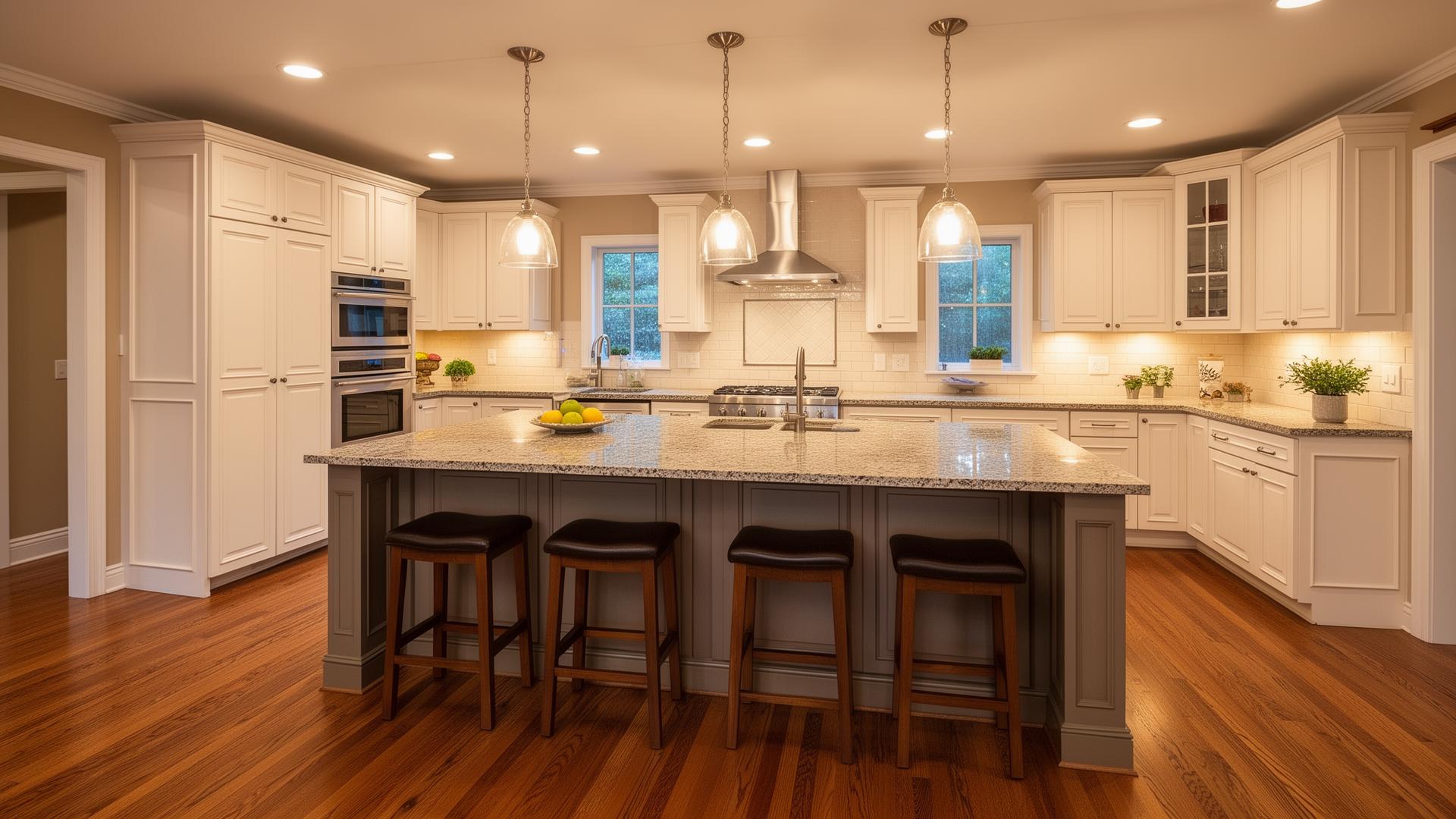
“After consulting with 4 other companies, I chose to proceed with my kitchen renovation in Lutherville with Baltimore County Roofing and Remodeling. The whole first floor looks so much bigger and brighter-couldn’t be happier with the end result. …”
Request your FREE estimate!
Baltimore County
Interior Remodeling
Kitchens, baths, basements, flooring, and full interior remodels. One design-build team from concept to final punch list. Transparent pricing, clean job sites, and no surprise change orders for known conditions.
MHIC #144465Financing AvailableDesign-Build
Request your FREE estimate!
Tell Us About Your Space
Request a FREE Remodel Estimate
Share your ideas and we'll schedule an in-home consultation to discuss layout, materials, and budget. No pressure, no spam, ever.
5.0
1,200+ local projects completed
Our Services
What We Build
Kitchen Remodeling
Custom cabinetry, countertops, and full layout changes — from cosmetic refreshes to structural gut renovations.
Read moreBathroom Remodeling
Tub-to-shower conversions, master bath gut renovations, powder room refreshes, and aging-in-place modifications.
Read moreBasement Finishing
From walkout daylight basements to partial-height ranchers — finished living space that respects the conditions of your foundation.
Read moreFlooring Installation
Hardwood, LVP, tile, and carpet — installed over a properly prepped subfloor so the job still looks great in year five.
Read moreInterior Painting
Premium paint, properly prepped surfaces, and clean lines — the kind of paint job where prep is 70% of the work.
Read moreTrim & Millwork
Crown molding, wainscoting, built-ins, and custom trim — one of the highest-impact cosmetic upgrades in any room.
Read moreHomeowner Reviews
What Baltimore County Homeowners Say About Our Interior Remodels
“I couldn’t be more positive about my experience with Matt and his group. Matt carefully and thoughtfully explained our options for redoing our floors. His team showed up on time, were friendly, skilled, efficient and very tidy. We couldn’t be happier with the results.”
Read all 5-star reviews on Google →
Verified reviews from Baltimore County homeowners who chose us for their remodels.
Interior Service
Kitchen Remodeling in Baltimore County
Baltimore County kitchens span everything from compact 1920s rowhome galleys in Catonsville and Dundalk to closed-off, oversized split-level kitchens from the 1960s and 1970s in Parkville, Perry Hall, and Pikesville. The most common request we get isn't a like-for-like update — it's opening a wall, removing a soffit, relocating a sink, and turning a cramped, isolated kitchen into the room where the household actually lives.
We handle the full range, from a cosmetic refresh (paint, hardware, countertops, backsplash) to a complete gut renovation involving structural changes, plumbing and electrical relocation, and new HVAC runs. The right scope depends on the bones of the kitchen, your budget, and how long you plan to stay in the home — and that's the conversation we have at the first visit.
Design-build means one team carries the project from initial measurement and layout through cabinet ordering, demolition, rough-in, finishes, and final punch list. You don't get handed off between a designer, a salesperson, and a separate contractor.
What's Included
- Custom, semi-custom, and stock cabinetry sourcing and installation
- Countertop templating, fabrication coordination, and installation
- Tile and stone backsplash installation
- Plumbing relocation (sink, dishwasher, refrigerator water lines, gas lines)
- Electrical upgrades (dedicated circuits, under-cabinet lighting, USB outlets, panel upgrades when needed)
- Lighting design — recessed, pendant, under-cabinet, and accent
- Flooring (LVP, hardwood, tile) with full subfloor prep
- Appliance coordination, delivery scheduling, and installation
- Permit application and inspection coordination with Baltimore County
- Daily project management and a single point of contact
Typical Timeline
Most full kitchen remodels take 4–8 weeks from demo to final walk-through, depending on scope, cabinet lead times, and whether structural or plumbing changes are involved. Cosmetic refreshes can complete in 1–2 weeks.
What Drives the Cost
- •Scope — cosmetic refresh vs. full gut renovation
- •Cabinetry tier (stock, semi-custom, fully custom; framed vs. frameless)
- •Countertop material and edge profile
- •Layout changes that move plumbing, gas, or electrical
- •Appliance package (builder-grade vs. professional series)
- •Flooring choice and whether subfloor work is required
- •Structural modifications (load-bearing walls, header work, soffit removal)
- •Permit-driven upgrades to electrical service or plumbing stacks
Material Options
Cabinetry
StockSemi-customFully customFramedFrameless (full-access)
Stock cabinets work when the existing layout is staying and you want value. Semi-custom is the sweet spot for most Baltimore County kitchens. Custom makes sense when you're working around odd dimensions, an old chimney chase, or want frameless European-style construction.
Countertops
QuartzGraniteQuartziteButcher blockSolid surfaceLaminate
Quartz is the most-requested for a reason — non-porous, no sealing, consistent color. Natural stone (granite, quartzite) is beautiful but needs sealing. Butcher block is warm but high-maintenance near the sink. We'll show real samples in your kitchen lighting before you decide.
Backsplash
Subway tile (ceramic, porcelain)Natural stoneMosaicLarge-format slabPressed tin
Backsplash is where you can take a stylistic risk on a small budget. We'll talk through grout color (which matters more than people expect), pattern, and how it reads against your countertop and cabinet color.
Flooring
Engineered hardwoodSolid hardwoodLuxury vinyl plank (LVP)Porcelain tile
If you have existing hardwood through the rest of the first floor, we usually weave new boards in to match. LVP is excellent for kitchens — waterproof, comfortable underfoot, and looks great. Tile is durable but cold and unforgiving on dropped dishes.
Considerations for Baltimore County Homes
Older Baltimore County homes in Towson, Catonsville, Pikesville, and Dundalk frequently have cast iron drain stacks, galvanized supply lines, knob-and-tube wiring fragments, or undersized 100-amp electrical panels. We plan for these discoveries during demo and price contingencies transparently rather than hitting you with a surprise change order. For homes built before 1978, we follow EPA RRP lead-safe practices on any disturbed painted surfaces.
Our Kitchen Remodeling Process
-
1
Discovery & Consultation
On-site visit, measurements, conversation about how you actually use the kitchen, scope and budget direction.
-
2
Design & Material Selection
Layout drawings, cabinet specification, countertop and finish selections, lighting plan.
-
3
Proposal & Permit Application
Detailed proposal, contract signing, then permit submission to Baltimore County.
-
4
Demolition
Tear-out of cabinets, countertops, flooring, and any walls being modified. Daily debris removal.
-
5
Rough-In
Plumbing, electrical, HVAC, and any structural framing brought up to current code.
-
6
Inspections
County rough-in inspections before walls close up.
-
7
Drywall, Flooring & Cabinets
Walls closed, flooring installed, cabinets set and leveled.
-
8
Countertop Templating & Installation
Templated to actual installed cabinets, then fabricated and installed (typically 1–2 weeks after templating).
-
9
Tile, Paint & Trim
Backsplash, painting, and finish carpentry.
-
10
Appliances & Final Fixtures
Appliance installation, faucet, lighting, and hardware.
-
11
Punch List & Walkthrough
Final detail pass, walkthrough with you, and warranty paperwork.
Kitchen Remodeling FAQs
Interior Service
Bathroom Remodeling in Baltimore County
Bathroom projects in Baltimore County range across a wide spectrum. Tub-to-shower conversions are one of our most-requested projects — homeowners reclaiming a never-used tub for a properly built tiled shower. Full master bath gut renovations are common in homes that haven't been touched since the 1980s or 1990s. Powder room refreshes are a quick high-impact upgrade. And aging-in-place modifications — curbless showers, grab bars, comfort-height toilets — are a growing share of our work as Baltimore County homeowners renovate to stay in place.
The single biggest factor in a bathroom that lasts is waterproofing done right. We use modern systems (Schluter Kerdi, RedGard liquid membrane, or properly built mortar pans) so the shower isn't quietly leaking into the framing for ten years before anyone notices.
What's Included
- Plumbing fixture supply and installation (toilets, sinks, tubs, showers, valves)
- Tile work — floor, walls, shower surround, niches, and benches
- Vanity and countertop installation
- Lighting design and installation
- Bath fan upgrades and proper venting to exterior
- Electrical upgrades (GFCI, dedicated circuits, heated floors)
- Waterproofing systems (Schluter Kerdi, RedGard, or properly built mortar pans)
- Custom glass shower enclosures
- Accessibility features — curbless showers, grab bar blocking, comfort-height fixtures
Typical Timeline
Most full bathroom remodels take 2–4 weeks. Tub-to-shower conversions can often be completed in 1–2 weeks. Powder room refreshes typically run 1 week or less.
What Drives the Cost
- •Bathroom size and tile square footage
- •Tile selection and pattern complexity (subway vs. herringbone vs. large-format slab)
- •Shower type — tiled curbless vs. tiled curbed vs. prefab base
- •Vanity tier and countertop material
- •Fixture tier (builder-grade vs. premium brands)
- •Structural or plumbing relocation
- •Heated floor inclusion
Material Options
Tile
Ceramic subwayPorcelain (large format and standard)Natural stone (marble, travertine)MosaicSlab walls
Porcelain is the workhorse — durable, water-resistant, and available in nearly any look including convincing marble visuals. Natural stone is gorgeous but needs sealing. Large-format porcelain on shower walls reduces grout lines dramatically and is increasingly popular.
Shower Pan
Tiled curbless (zero-entry)Tiled with curbPrefab acrylic or composite base
Tiled curbless is the high end — looks seamless, ages-in-place ready, but requires careful drainage and waterproofing planning. Tiled with curb is the most common premium option. Prefab bases are reliable, fast, and affordable when the look works for you.
Vanity
Stock prefabSemi-customFully custom built-inFloating wall-mount
A stock vanity is the right choice when the size fits and you want value. Custom makes sense in tight or odd-shaped powder rooms. Floating vanities make small bathrooms feel larger.
Waterproofing
Schluter Kerdi sheet membraneRedGard liquid membraneTraditional mortar pan with PVC liner
We don't take shortcuts here. The cost difference between proper waterproofing and a cheap install is small; the cost difference five years later when water has been migrating into the subfloor is enormous.
Considerations for Baltimore County Homes
Older Baltimore County bathrooms often have cast iron drain stacks and galvanized supply lines that should be replaced during a gut renovation while walls are open — pulling them out costs little extra now and avoids a future failure. Second-floor bathrooms on older homes need structural awareness; tile and stone are heavy, and original framing may need sistering.
Our Bathroom Remodeling Process
-
1
Consultation
On-site review of the existing bathroom, scope conversation, measurements.
-
2
Design & Material Selection
Layout, tile, fixtures, vanity, and lighting selections.
-
3
Permit
Pulled when plumbing relocation or structural work is involved.
-
4
Demolition
Full tear-out down to studs and subfloor.
-
5
Plumbing & Electrical Rough-In
New supply, drain, vent, and electrical runs to current code.
-
6
Waterproofing & Inspections
Schluter or RedGard application, county inspection where required.
-
7
Tile
Floor, walls, shower, niches, and accents.
-
8
Vanity & Fixtures
Vanity set, plumbing fixtures installed, lighting hung.
-
9
Paint & Trim
Final paint, baseboards, and trim.
-
10
Final Inspection & Walkthrough
County final inspection (when permitted) and walkthrough with you.
Bathroom Remodeling FAQs
Interior Service
Basement Finishing in Baltimore County
Baltimore County basements vary enormously. Newer homes in Owings Mills, Perry Hall, and White Marsh often have full-height walkout basements that finish almost like an extra floor. Mid-century ranchers in Parkville, Randallstown, and Pikesville frequently have 7-foot ceilings and a single small window. Pre-1940 homes in Catonsville and Dundalk often have stone or rubble foundations with persistent moisture concerns that have to be addressed before any framing goes up.
The right basement finish starts with an honest assessment of what you're working with. We don't frame walls against a foundation that's actively wet — we fix the moisture first. We don't promise full-height ceilings where the joists are 6'-9". We talk through realistic outcomes for your specific basement before quoting.
What's Included
- Moisture assessment and remediation planning
- Egress window installation (required by code for basement bedrooms)
- Framing — walls, soffits, mechanical chases
- Electrical — outlets, lighting, dedicated circuits, smoke/CO detection
- HVAC extension — supply and return runs to condition the new space
- Plumbing for basement bathrooms and wet bars (including ejector pumps when below sewer)
- Insulation appropriate to below-grade walls
- Drywall, paint, flooring, and trim
- Built-ins, entertainment areas, home offices, gyms, and full bathroom additions
Typical Timeline
Most basement finishing projects take 6–10 weeks depending on square footage, whether we're adding a bathroom, and any moisture or egress work required up front.
What Drives the Cost
- •Square footage being finished
- •Moisture remediation needs (interior drainage, sump, vapor barrier work)
- •Egress window addition (excavation, window well, structural opening)
- •Bathroom inclusion — and whether an ejector pump is required
- •Wet bar or kitchenette inclusion
- •Ceiling treatment — drywall vs. drop ceiling
- •Flooring choice
Material Options
Flooring
Luxury vinyl plank (LVP)Engineered hardwood (rated for below-grade)Carpet tilePolished or stained concrete
LVP dominates basements for good reason — it's waterproof, dimensionally stable in a humid environment, and looks great. Carpet works in dedicated low-traffic spaces like a TV room but is a poor choice anywhere moisture is possible. Solid hardwood does not belong below grade.
Ceiling
Drywall (flat finish)Suspended drop ceilingHybrid (drywall with drop access panels)
Drywall looks like a real room but cuts off easy access to plumbing, valves, and HVAC dampers. Drop ceiling looks more utilitarian but every fixture above stays accessible. The hybrid approach is often the best of both — drywall in the main space with strategic access panels.
Lighting
Recessed LEDSurface-mount LED panelsTrack lightingPendant accent
Recessed is the cleanest look. In low-ceiling basements, ultra-thin canless LED fixtures recess into joist cavities without protruding. Layered lighting (overhead + accent + task) is what makes a basement feel like a real room rather than a cellar.
Considerations for Baltimore County Homes
Older Baltimore County homes — particularly in Catonsville, Towson, Dundalk, and pre-war Pikesville — often have moisture issues from foundation drainage, downspout discharge too close to the house, or original stone foundations. We assess and address moisture before framing. Maryland code requires egress windows for any basement bedroom; we handle the excavation, structural opening, and window well as part of the project.
Our Basement Finishing Process
-
1
Assessment
Moisture inspection, ceiling height measurement, structural review, mechanical assessment.
-
2
Design
Layout, room configuration, bathroom and bar planning, lighting design.
-
3
Permit
Pulled through Baltimore County, with separate permits for plumbing and electrical when applicable.
-
4
Moisture Remediation
If needed — interior drainage, sump installation, vapor management, before any framing.
-
5
Framing
Walls, soffits, and mechanical chases.
-
6
Electrical, Plumbing & HVAC Rough-In
All mechanical work to current code.
-
7
Insulation
Appropriate insulation for below-grade walls.
-
8
Drywall
Hung, taped, and finished.
-
9
Flooring, Paint & Trim
Floors installed, walls painted, baseboards and trim set.
-
10
Fixtures & Finals
Lighting, plumbing fixtures, and hardware. Final inspection.
Basement Finishing FAQs
Interior Service
Flooring Installation in Baltimore County
Most flooring problems trace back to subfloor prep, not the flooring product itself. A perfectly fine LVP product installed over an unlevel, dirty, or moisture-compromised subfloor will telegraph every flaw within a year. Engineered hardwood installed without acclimating to the home's humidity will cup or gap. Tile installed over a deflecting subfloor will crack at the grout lines.
We handle all the major flooring categories, but the value we add is the prep work underneath. We test moisture, level, replace damaged subfloor, install proper underlayment, and only then install the finished floor.
What's Included
- Subfloor inspection, moisture testing, and prep
- Demolition and disposal of existing flooring
- Underlayment installation appropriate to the flooring type
- Hardwood installation (solid or engineered)
- Luxury vinyl plank and luxury vinyl tile installation
- Tile installation (porcelain, ceramic, natural stone)
- Carpet installation including pad
- Baseboard and shoe molding coordination
- Transition strips between flooring types
- Final cleanup and walkthrough
Typical Timeline
Most single-room flooring jobs take 1–3 days. Single-floor whole-area installs typically run 2–5 days. Whole-home flooring projects run 1–2 weeks.
What Drives the Cost
- •Flooring material choice and quality tier
- •Square footage
- •Subfloor condition and prep required
- •Pattern complexity (straight lay vs. diagonal vs. herringbone)
- •Stair installation and nosings
- •Removal and disposal of existing flooring
Material Options
Hardwood
Solid hardwood (3/4" oak, maple, hickory)Engineered hardwood (multi-ply with real wood wear layer)
Solid hardwood is best on the main level over plywood subfloor; can be refinished multiple times. Engineered is more dimensionally stable, can go over concrete or radiant heat, and modern wear layers refinish nearly as well as solid.
Luxury Vinyl
LVP (planks, wood look)LVT (tile look)Click-lock floatingGlue-down
LVP has earned its dominance — waterproof, comfortable, dent-resistant, and visually convincing. The cheapest products dent and fade; mid-range and up perform extremely well. Click-lock is faster to install; glue-down is more stable for large open floor plans.
Tile
PorcelainCeramicNatural stone (marble, travertine, slate)Large format slabs
Porcelain is harder, less porous, and more durable than ceramic — almost always worth the small upcharge. Natural stone needs sealing. Large-format tile (24"x48" and up) requires a very flat subfloor; we level as needed before installation.
Carpet
NylonPolyesterWoolBerber loopCut pile
Carpet still makes sense in bedrooms and dedicated low-traffic spaces. Nylon is the most durable mainstream fiber. The pad matters as much as the carpet — a quality pad doubles perceived comfort and product life.
Considerations for Baltimore County Homes
Older Baltimore County homes — particularly in Catonsville, Towson, Pikesville, and Dundalk — frequently have original 1920s–1950s hardwood under wall-to-wall carpet or sheet vinyl. Before assuming replacement, we lift a corner and inspect. In many cases, refinishing the original floor is the right call — both better looking and better value than a new product.
Our Flooring Installation Process
-
1
Inspection & Measurement
On-site review of existing flooring, subfloor condition, moisture testing.
-
2
Material Selection
Samples reviewed in your home's lighting, final selection and quantity calculation.
-
3
Order & Acclimation
Material delivered and acclimated to your home's humidity (especially hardwood).
-
4
Demolition
Existing flooring removed and disposed.
-
5
Subfloor Prep
Leveling, patching, fastening loose subfloor, replacing damaged sections.
-
6
Installation
Floor installed per manufacturer spec.
-
7
Transitions & Trim
Transition strips, shoe molding, or baseboard reinstallation.
-
8
Final Walkthrough
Clean-up, walkthrough with you, care and maintenance guidance.
Flooring Installation FAQs
Interior Service
Interior Painting in Baltimore County
Interior painting looks deceptively simple, which is why it's the most common DIY-gone-wrong project we get called to fix. The difference between a paint job that looks great for ten years and one that fails in two is almost entirely about prep — surface cleaning, drywall repair, proper priming, sanding between coats, and using the right product for the surface.
We use premium paints because the cost difference per gallon is small and the difference in coverage, longevity, and color hold is enormous. We prep surfaces properly: patch and sand drywall imperfections, prime stains and patches, mask trim and floors, and put on two full coats — not one heavy coat called two.
What's Included
- Furniture protection and floor masking
- Surface cleaning and degreasing
- Drywall patching and minor repair
- Caulking gaps at trim, baseboard, and crown
- Spot priming of stains, patches, and bare drywall
- Two full coats of premium paint
- Trim, doors, and door frames
- Daily and final cleanup
Typical Timeline
A single room typically takes 1–2 days. A whole-home interior repaint takes 5–10 days depending on square footage, ceiling height, and trim complexity.
What Drives the Cost
- •Square footage of walls and ceilings
- •Ceiling height (9' and 10' ceilings cost more than 8')
- •Trim, door, and door frame inclusion
- •Number of colors (more colors = more cut-in time)
- •Prep work required (heavy patching, stain blocking, plaster repair)
- •Cabinet painting if included
Material Options
Paint Brand & Tier
Sherwin-Williams Duration / EmeraldBenjamin Moore Regal Select / AuraBehr Marquee / Ultra
We default to Sherwin-Williams or Benjamin Moore premium lines because they cover better, hold color longer, and clean up better than economy lines. The cost difference per room is modest. We're happy to discuss product choice during the consultation.
Sheen by Room
Matte / Flat (ceilings, low-traffic walls)Eggshell (most walls)Satin (kitchens, bathrooms, kids' rooms)Semi-gloss (trim, doors)Gloss (specialty doors and accents)
Eggshell is the right call for most living spaces — washable, non-reflective enough to hide minor wall imperfections. Satin handles moisture in kitchens and bathrooms. Semi-gloss on trim makes it pop and stands up to cleaning.
Considerations for Baltimore County Homes
Older Baltimore County homes — built before the 1960s in places like Catonsville, Towson, and Dundalk — frequently have original plaster walls rather than drywall. Plaster requires different prep, different patching compounds, and different priming. We know the difference. For homes built before 1978, we follow EPA RRP lead-safe practices on any sanding or scraping of existing paint.
Our Interior Painting Process
-
1
Assessment & Color Consultation
Walk-through to scope, discuss colors, and identify prep work needed.
-
2
Furniture & Floor Protection
Items moved to room center and covered, floors fully masked.
-
3
Surface Prep & Repair
Patching, sanding, caulking, and cleaning.
-
4
Priming
Spot priming of patches, stains, and bare surfaces.
-
5
Paint
Two full coats applied, sanded lightly between if needed.
-
6
Trim & Finish Work
Trim, doors, and frames painted.
-
7
Cleanup & Walkthrough
Furniture returned, all masking removed, walkthrough with you.
Interior Painting FAQs
Interior Service
Trim & Millwork in Baltimore County
Trim is one of the highest-impact, lowest-cost-per-room upgrades in interior remodeling. Crown molding gives a room formality. Wainscoting and beadboard add depth and texture. A built-in bookcase turns dead wall space into the visual anchor of a room. Custom window casing transforms basic openings into architectural features.
Good trim work is invisible in the right way — corners look square even when they aren't, miters are tight, scribed cuts hide the imperfections of older homes. That precision is the difference between trim that looks bespoke and trim that looks DIY.
What's Included
- Design consultation on profile, scale, and material
- Material sourcing — paint-grade or stain-grade
- Custom milling for specialty profiles when needed
- Wall and corner prep
- Installation with proper fastening and adhesives
- Caulking, filling, and sanding
- Priming and painting (or staining and finishing)
Typical Timeline
Single-room trim upgrades (crown, wainscoting, or chair rail) typically complete in 3–5 days including paint. Whole-house trim packages run 2–3 weeks. Custom built-ins range from 1 to 3 weeks depending on size and complexity.
What Drives the Cost
- •Linear footage of trim being installed
- •Profile complexity (simple stock vs. multi-piece built-up profiles)
- •Material choice (paint-grade MDF vs. solid wood vs. hardwood for stain)
- •Wall and corner condition (old plaster, out-of-square corners require more prep)
- •Paint or stain finish included
Material Options
Paint-Grade
Primed MDFPrimed pine (poplar)Finger-jointed primed pine
MDF is the most stable, takes paint beautifully, and is the right choice for crown, casing, and baseboard that will be painted. Solid pine or poplar costs more but is preferred for thick built-up profiles or where impact resistance matters.
Stain-Grade
Red oakWhite oakMapleCherryWalnut
Choose based on the look you want and what the existing trim and floors are. Red oak is the most common and most affordable. White oak is increasingly preferred for modern stains. Cherry and walnut are higher-end accents.
Profile Style
Modern flat (1"x4" casing, square baseboard)Traditional (Colonial casing, ogee baseboard)Craftsman (flat casing with cap)Victorian (multi-piece built-up)
We match new trim to the era of your home, or deliberately update to a different style. Modern flat trim in a 1920s bungalow can look great or jarring depending on the rest of the design.
Considerations for Baltimore County Homes
Older Baltimore County homes — bungalows in Catonsville, rowhomes in Dundalk, mid-century homes in Pikesville and Parkville — often have out-of-square corners, settled walls, and original plaster. Experienced trim carpentry scribes, shims, and back-cuts so the finished trim looks tight and intentional even when the underlying walls aren't.
Our Trim & Millwork Process
-
1
Design & Profile Selection
Style, scale, and material decisions.
-
2
Material Sourcing
Trim ordered or milled to spec.
-
3
Wall Prep
Surface check, blocking installed where needed for built-ins.
-
4
Installation
Cuts, scribes, fastening, and adhesives.
-
5
Caulk & Fill
Joints caulked, nail holes filled, sanded smooth.
-
6
Paint or Stain
Primed and painted, or stained and finished.
-
7
Final Walkthrough
Detail review with you.
Trim & Millwork FAQs
Why Choose Us
Our Promise to You
Design-Build Approach
One team, one contract, one point of accountability — from first sketch through final punch list. No finger-pointing between designer and builder.
Licensed & Insured
Maryland Home Improvement Contractor License MHIC# 144465. Full liability and workers' compensation coverage on every job.
Older-Home Experience
We routinely work in pre-1978 Baltimore County homes — plaster walls, knob-and-tube remnants, settled framing — and follow safe work practices for disturbing painted surfaces in older housing stock.
Work With Designers — or Bring Your Own
Our in-house design process covers most projects. If you're already working with a designer or architect, we build from their plans seamlessly.
Transparent Pricing
Detailed line-item proposals. No surprise change orders for known conditions. We discuss likely discoveries before demo, not after.
On-Time Delivery
Realistic schedules in writing before you sign, daily progress, and clear communication when something shifts.
Clean Job Sites
Floor protection, dust containment with zip walls, daily debris removal, and a respectful crew that treats your home like it's theirs.
Workmanship Warranty
We warranty our workmanship in writing. Manufacturer warranties on cabinets, countertops, fixtures, and appliances pass through to you.
How We Work
Our Remodeling Process
1
Consultation
On-site visit, scope and budget conversation, measurements.
2
Design & Selections
Layouts, material and finish selections, lighting and fixture choices.
3
Proposal & Contract
Detailed scope and pricing, signed agreement, deposit.
4
Permitting
Submitted to Baltimore County and tracked to issuance.
5
Construction
Demolition, rough-in, inspections, finishes — managed daily by your project lead.
6
Walkthrough & Punch List
Final detail review with you, any remaining items completed.
7
Warranty
Workmanship warranty in writing; manufacturer warranties pass through to you.
Local Expertise
Baltimore County Interior Remodeling Considerations
Older Home Conditions
A meaningful share of Baltimore County's housing stock was built before 1960, and a significant portion before 1940. That means cast iron drain stacks, galvanized supply lines, knob-and-tube wiring fragments, original plaster walls, undersized 100-amp electrical panels, and out-of-square framing are routine discoveries during demo. We've worked in enough Towson, Catonsville, Pikesville, and Dundalk homes to anticipate these conditions and price contingencies transparently rather than ambushing you with change orders.
Permits & Inspections
Most interior remodels involving plumbing, electrical, or structural work require a permit through the Baltimore County Department of Permits, Approvals and Inspections. We handle the application, inspection scheduling, and final sign-off as part of the project. Permitted work protects you at resale and ensures compliance with current Maryland code.
Historic District Considerations
Parts of Catonsville, Reisterstown's Main Street corridor, and pockets of Dundalk fall within historic districts or historically significant areas. Exterior changes are tightly governed; interior remodels generally are not — but trim profiles, window treatments, and millwork choices that respect the era of the home matter both for character and resale.
HOA Considerations in Newer Communities
Newer planned communities in Owings Mills, Perry Hall, and the Mays Chapel area often have HOA architectural review requirements for certain interior modifications visible from the exterior (window changes, door replacements). We coordinate any HOA submittals as part of the project where applicable.
Coordinating With Exterior Work
Interior projects often surface exterior issues — and vice versa. If your interior project also involves roofing or exterior remodeling (siding, windows, gutters), we coordinate the full scope under one contract and one project lead.
Local Coverage
We Serve All of Baltimore County
Towson
On Rodgers Forge and Stoneleigh rowhomes, the leak you can't trace is almost al…
Catonsville
Heavy oak canopy and limestone-filler shingles produce the streaked, prematurel…
Parkville
Most 1940s-60s ramblers and Cape Cods were built without continuous ridge venti…
Perry Hall
Cross-gabled colonials in Honeygo and Perry Hall Farms have so many roof-to-wal…
Dundalk
Sustained Patapsco wind exposure on Turners Station and St. Helena blocks is wh…
Essex
Back River humidity and aggressive ice damming on north slopes drive water unde…
Lutherville-Timonium
Larger custom homes with complex rooflines, multiple valleys, and tall chimneys…
Pikesville
Mature canopy across Sudbrook and Old Pikesville plus a mix of pre-war stone ho…
Owings Mills
Planned-community HOAs and matching color requirements make Owings Mills replac…
Randallstown
Mid-century ranchers and 1970s splits across Randallstown share the same weak p…
Middle River
Open waterfront exposure and 1950s post-war framing mean wind-rated assemblies…
Reisterstown
Historic Main Street homes and newer surrounding subdivisions need very differe…
White Marsh
Most 1990s-2000s tract homes in White Marsh came with builder-grade 3-tab and m…
Nottingham
Townhome clusters in Nottingham require coordinated tear-offs and matched shing…
Arbutus
Bungalows near UMBC have steep pitches, old step flashing into brick chimneys,…
Common Questions
Interior Remodeling FAQs
From the Blog
Plan Your Remodel
Ready to Get Started?
Contact us today for a free, no-obligation estimate. Licensed, insured, and ready to work.