
Roofing in
Perry Hall, MD
Get a real Perry Hall roof estimate in 60 seconds. Photos of your roof, clear line-item pricing. No salesperson. No obligation.
MHIC #144465Financing AvailableInstant Estimates
5/5
Google Reviews
< 24 hours
Response Time
1200+
Projects Completed
#144465
MHIC License
Local Expertise
Why Perry Hall Homes Need Specialized Roofing
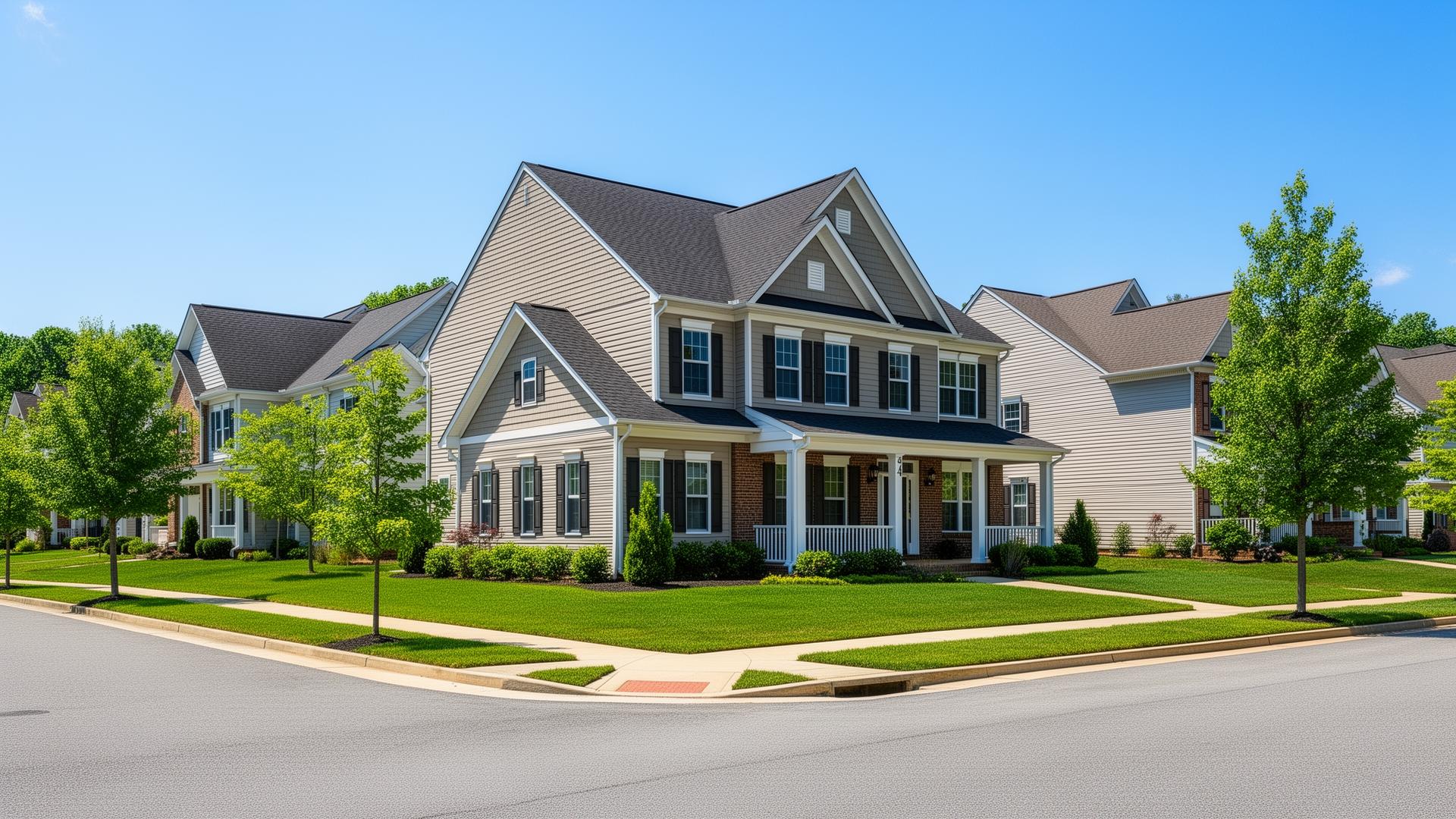
Perry Hall's housing stock is the newest and lowest-density of the northeast Baltimore County communities we serve, with most of Honeygo, Gunpowder, Chapel Hill, Seven Courts, and Perry Hall Farms built between the late 1970s and the late 1990s. Roof pitches run from steep 9/12 and 10/12 on the larger colonials to moderate 7/12 on the cross-gabled ranchers, and lots are noticeably larger than in Parkville or Nottingham — which means more architectural complexity per home and more roof planes per address.
The defining technical reality is geometry. Cross-gabled colonials with garage-side gables, two-story foyer bump-outs, second-story bedroom additions, and porch overhangs create multiple roof-to-wall transitions, intersecting valleys, and dead-valley areas behind chimneys and dormers. Each of these junctions has to be detailed correctly — woven step flashing into the sidewall, kickout flashing where the eave meets the wall to direct water into the gutter, and proper counter flashing into the siding above. The failure mode here isn't dramatic; it's a slow stain on a family-room ceiling that took two seasons to show up because water entered at a roof-to-wall junction nobody was watching. We treat every Perry Hall replacement as a flashing job first and a shingle job second.
Multi-Gable Cross Geometry
Cross-gabled Perry Hall colonials have multiple roof planes intersecting at short valleys and roof-to-wall junctions — areas that need woven step flashing and properly detailed valleys, not roofing cement. We rebuild every transition as part of a re-roof rather than reusing aging flashing.
Missing Kickout Flashing
Where a garage or porch roof eave terminates against the upper sidewall, kickout flashing redirects water into the gutter instead of letting it run down the siding behind the wall finish. Most 1980s–1990s Perry Hall homes were built without it. We install kickout flashing on every applicable junction during a re-roof.
Two-Story Foyer Bump-Out Leaks
The two-story foyer bump-out common on Perry Hall colonials creates a small roof tying into a large sidewall — a high-failure junction when the original step flashing was sealed with caulk instead of woven into the courses. We rebuild it with proper step and counter flashing.
Dead Valleys Behind Chimneys & Dormers
Larger Perry Hall homes often have dead-valley areas where two roof planes meet behind a chimney or dormer with no clear drainage path. We install proper crickets, ice and water shield, and sometimes specify a soldered or welded metal pan in the worst cases.
Coverage
Neighborhoods We Serve in Perry Hall
ZIP Codes Served: 21128 · 21236
Local Services
Our Services in Perry Hall
Our Baltimore County roofing crews handle everything from step-flashing rebuilds to full replacements for Perry Hall homes — alongside exterior and interior remodeling for the full project.
Multi-Gable Roof Replacement
Perry Hall's cross-gabled colonials need every transition rebuilt as part of a re-roof — not just shingle replacement. We detail each roof-to-wall junction, valley, and dead valley with proper flashing rather than reusing the original materials that failed in the first place.
What this looks like in Perry Hall
A typical Perry Hall replacement includes full tear-off, deck inspection, ice and water shield at eaves and valleys (and across all dead valleys), synthetic underlayment, drip edge, woven step flashing at every roof-to-wall junction, kickout flashing at every eave-to-wall transition, properly framed crickets where needed, architectural shingles, and continuous ridge ventilation. Larger multi-gable roofs may take two to three days.
Roof-to-Wall Flashing Repair
On 1980s–1990s Perry Hall homes, the most common leak source isn't the field shingle — it's a roof-to-wall junction that was caulked instead of properly flashed. We rebuild the junction with woven step flashing and counter flashing into the siding rather than re-sealing the existing detail.
What this looks like in Perry Hall
A typical roof-to-wall repair includes removing the existing siding course at the junction, removing the failed flashing, weaving new step flashing into each shingle course, installing kickout flashing at the eave-wall transition, and installing counter flashing under the replaced siding course. We document the rebuild with photos at every stage.
Roof Repair
Perry Hall homes often need targeted repairs at dead valleys, around chimneys, or at vent boots and skylight curbs — areas where the original installation has aged out before the field shingles. We isolate the source with a photo-backed inspection.
What this looks like in Perry Hall
A typical Perry Hall repair starts with a photo-backed inspection of the deck, flashings, vents, and shingle field. We isolate the source, repair with matching materials, and verify the work with a follow-up walkthrough.
Exterior Remodeling
On Perry Hall's larger detached homes, siding repair at roof-to-wall junctions, gutter replacement, and trim repair around dormers and bump-outs are typically coordinated with the roof so the entire envelope is detailed as one system.
What this looks like in Perry Hall
Typical Perry Hall exterior projects include vinyl or fiber-cement siding replacement, seamless aluminum gutter replacement with leaf protection, aluminum fascia and soffit wrap, and trim repair around dormers, bump-outs, and porch overhangs.
FAQs
Perry Hall Roofing FAQs
Why does my Perry Hall family-room ceiling have a stain when the roof shingles look fine?
On cross-gabled Perry Hall colonials, the most common source of a slow ceiling stain is a roof-to-wall junction — typically at a two-story foyer bump-out, garage-to-house transition, or dormer side. Water enters at a failed step flashing or missing kickout flashing and tracks behind the wall finish for months before it shows up on the ceiling. We isolate the actual junction with a photo-backed inspection rather than guessing at the shingles.
What is kickout flashing and why does it matter on a Perry Hall home?
Kickout flashing is a small angled piece of metal installed at the bottom of a roof-to-wall junction — where the eave terminates against an upper sidewall — to redirect water into the gutter instead of letting it run down behind the siding. Most 1980s–1990s Perry Hall homes were built without it, and the resulting hidden water damage to sheathing and framing is one of the most common issues we find during inspections. We install kickout flashing on every applicable junction during a re-roof.
How long does a multi-gable roof replacement take on a Perry Hall colonial?
Most single-family Perry Hall replacements complete in one to two days, weather permitting. Larger homes with multiple gables, dormers, and complex valley geometry sometimes take two to three days for proper flashing detail. We give you a written schedule before the crew arrives and keep you updated each day.
Do I need a permit for a roof replacement in Perry Hall?
Baltimore County requires a permit for roof replacement, and we handle the permit process as part of every project. Some Perry Hall HOAs in Honeygo and Perry Hall Farms have architectural review requirements for shingle color and profile — we confirm before quoting and submit the architectural review on your behalf where required.
Are you licensed and insured to work in Perry Hall?
Yes. We are a Maryland Home Improvement Contractor (MHIC# 144465) and carry full general liability and workers' compensation coverage on every project. Proof of insurance is available on request before any work begins.
Local Knowledge
Permits & Building Codes in Perry Hall
Permits
Baltimore County requires a permit for roof replacement and most exterior remodeling work in Perry Hall. We handle the application, inspections, and final sign-off as part of every project. Several Perry Hall communities — particularly in Honeygo and Perry Hall Farms — have HOA architectural review requirements for shingle color and profile, and we submit the architectural review on the homeowner's behalf where required.
Building Codes
Perry Hall falls under Baltimore County's adopted edition of the International Residential Code, which requires kickout flashing at roof-to-wall transitions and step flashing woven into each shingle course (not surface-applied or caulked). Current code editions and amendments are published by the Baltimore County Department of Permits, Approvals and Inspections at baltimorecountymd.gov/departments/permits.
Climate Notes
Perry Hall sits in IECC Climate Zone 4A. The complex roof geometry of 1980s–1990s colonials means more linear footage of valleys, transitions, and dead valleys per square foot of roof area — all of which need ice and water shield protection against freeze-thaw infiltration. We design every Perry Hall roof system around the geometry of the specific home, not a per-square average.
Service Area Map
We're Local to Perry Hall
Prefer a Callback?
Talk to a Human Instead
Share a few details about your Perry Hall project and a team member will reach out within 24 hours. No spam calls or texts, ever.
Request a FREE Callback
A team member will reach out to find a time that works for you.
1,200+ local projects completed