
Roofing in
Dundalk, MD
Get a real Dundalk roof estimate in 60 seconds. Photos of your roof, clear line-item pricing. No salesperson. No obligation.
MHIC #144465Financing AvailableInstant Estimates
5/5
Google Reviews
< 24 hours
Response Time
1200+
Projects Completed
#144465
MHIC License
Local Expertise
Why Dundalk Homes Need Specialized Roofing
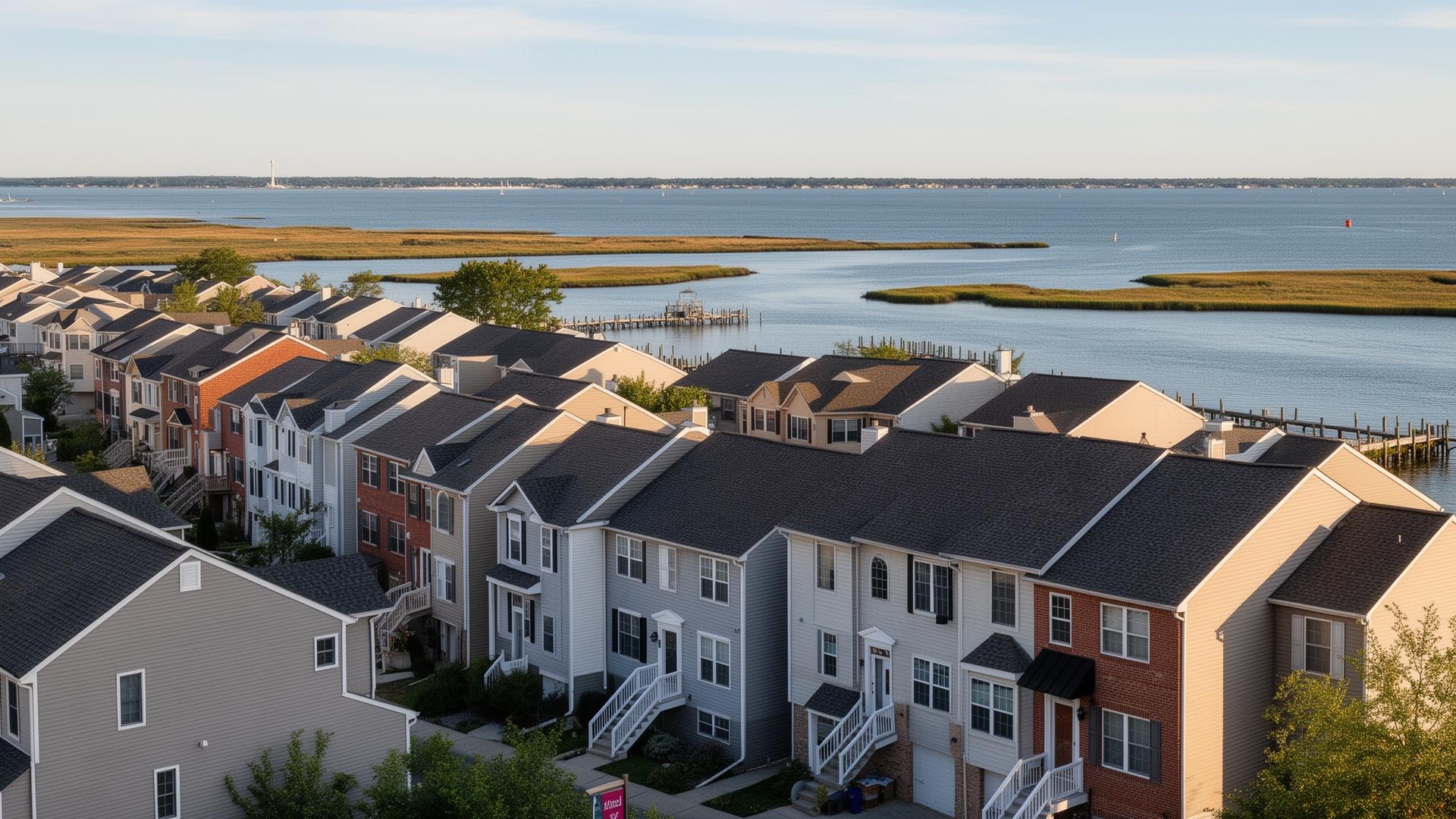
Dundalk is a working-class peninsula community shaped by its shipyard and steel-mill history. The dominant housing stock is 1940s–1950s post-war brick rowhomes and frame bungalows in Turners Station, St. Helena, Gray Manor, and Eastpoint, with later mid-century ranchers and Cape Cods spread across Trappe, Norwood, and Lodge Forest. Streets in Watersedge and Sparrows Point run east-west toward open water, which means sustained wind loading on the eave and rake edges that interior Baltimore County roofs never see.
The failure pattern is consistent: shingles installed before 110-mph wind ratings became standard lift at the eave first, then water finds the unprotected sheathing edge under the original drip edge. Salt-influenced air from the Patapsco corrodes galvanized fasteners and accelerates the breakdown of unprotected metal accessories. We address both: every Dundalk replacement gets a sealed starter strip with adhesive at the eave and rake, a 6-nail high-wind nailing pattern, hot-dipped or stainless fasteners where exposure warrants it, and hip and ridge cap rated for the same wind exposure as the field.
Wind Uplift at Eaves & Rakes
Original 3-tab roofs on Dundalk post-war homes were installed with a 4-nail pattern rated for 60-mph winds — well below the gust loads on exposed peninsula blocks. We reset the standard with a sealed starter strip and a 6-nail high-wind pattern on every shingle.
Salt-Influenced Fastener Corrosion
Galvanized roofing nails and unprotected drip edge corrode faster in Dundalk's salt-influenced air, especially in Watersedge and Sparrows Point. We use hot-dipped galvanized or stainless fasteners and corrosion-resistant aluminum or pre-painted steel drip edge on exposure-prone roofs.
Hand-Sealing in Cold-Weather Installs
Asphalt shingles installed below about 50°F may not heat-seal on their own before the first wind event hits. On cold-weather Dundalk installs we hand-seal each shingle tab with roofing cement so the system is wind-rated immediately rather than after the next warm spell.
Hip & Ridge Cap Failure
Standard cut-from-3-tab hip and ridge cap blows off long before the field shingles do. We install factory hip and ridge cap with the same wind rating as the field and fasten it per the high-wind specification.
Coverage
Neighborhoods We Serve in Dundalk
ZIP Codes Served: 21222
Local Services
Our Services in Dundalk
Our Baltimore County roofing crews handle everything from step-flashing rebuilds to full replacements for Dundalk homes — alongside exterior and interior remodeling for the full project.
High-Wind Roof Replacement
Dundalk's exposure makes wind rating the dominant design factor. We install architectural shingles rated for at least 110-mph winds with a 6-nail high-wind nailing pattern, sealed starter strip at eaves and rakes, and matched factory hip and ridge cap so the entire system carries the same rating.
What this looks like in Dundalk
A typical Dundalk replacement includes full tear-off, deck inspection, ice and water shield at eaves, synthetic underlayment, sealed starter strip at eaves AND rakes, drip edge in pre-painted aluminum or steel, architectural shingles installed with a 6-nail high-wind pattern, factory hip and ridge cap, and hot-dipped or stainless fasteners on exposure-prone roofs. Most ranchers and bungalows complete in one day.
Storm Damage & Wind Repair
When a storm strips shingles off a Watersedge or Sparrows Point roof, the question is whether the underlying assembly is salvageable or whether the same failure will repeat. We document the damage, replace the lifted shingles to a high-wind specification, and re-seal the surrounding field.
What this looks like in Dundalk
A typical Dundalk wind-damage repair starts with a photo-backed inspection of every slope, with attention to eaves, rakes, hips, and ridges. We replace lifted or missing shingles with matched material, hand-seal the surrounding tabs, and re-fasten any course where the original 4-nail pattern was insufficient. We document everything for insurance claims.
Roof Repair
Many Dundalk leaks trace to a corroded fastener or a lifted starter course at the eave — not to the shingle field. We isolate the corrosion or uplift point, replace the affected materials with corrosion-resistant equivalents, and re-tie the repair into the surrounding system.
What this looks like in Dundalk
A typical Dundalk repair begins with a photo inspection of the eaves, rakes, and any visible flashing. We replace failed fasteners with hot-dipped or stainless equivalents, re-bed any lifted starter shingles, and seal the surrounding field with matched roofing cement and shingles.
Exterior Remodeling
Dundalk's coastal-influenced air also breaks down original aluminum gutters, fascia, and soffit panels faster than it does inland. We replace with thicker-gauge aluminum or pre-painted steel and properly seal end caps and miters so corrosion doesn't restart at the seams.
What this looks like in Dundalk
Typical Dundalk exterior projects include heavier-gauge seamless aluminum gutters with sealed seams, pre-painted aluminum or steel fascia and soffit wrap, soffit-vent installation balanced with ridge ventilation, and trim repair on eaves and rakes that have suffered from years of wind-driven moisture.
FAQs
Dundalk Roofing FAQs
Why do shingles keep blowing off my Watersedge roof?
Almost always because the existing roof was installed before high-wind nailing patterns became standard. Original 3-tab shingles were rated for 60-mph winds with a 4-nail pattern, which isn't enough for the sustained wind exposure on Dundalk peninsula blocks. The fix is a full-system replacement with 110-mph-rated architectural shingles, a sealed starter strip at eaves AND rakes, and a 6-nail high-wind pattern.
Does the salt air really affect my roof in Turners Station?
Yes — not as severely as a true coastal home, but enough to corrode galvanized roofing nails, unprotected drip edge, and bare steel flashing over 30–50 years. On exposure-prone blocks we use hot-dipped galvanized or stainless fasteners, pre-painted aluminum or steel drip edge, and aluminum step flashing rather than bare galvanized steel.
What's a sealed starter strip and why does my Dundalk roof need one?
A sealed starter strip is a factory shingle with an adhesive band that runs along the eave and rake edges before the field shingles go on. It bonds the bottom of the first course down so wind can't lift it — which is exactly where uplift starts on a Dundalk roof. Standard practice on most Baltimore County roofs is starter at the eave only; on Dundalk we install it at the rake too.
Can you replace a roof in winter without losing the wind rating?
Yes. Asphalt shingles need warmth to heat-seal naturally, so a cold-weather install can leave the roof unsealed and vulnerable to the next windstorm. We hand-seal each shingle tab with roofing cement during cold-weather installs so the system is fully wind-rated the day we leave the job — not weeks later when temperatures finally climb.
My Sparrows Point home took wind damage in a storm — will insurance cover the replacement?
If the damage is documented properly, often yes. We do a photo-backed inspection of every slope, hip, and ridge, document missing or lifted shingles and any damaged metal accessories, and meet the adjuster on the roof when they come out. The homeowner pays us directly per a standard MHIC contract; we make sure the documentation supports a fair claim.
Do I need a permit for a roof replacement in Dundalk?
Yes. Dundalk is unincorporated Baltimore County, and roof replacement is permitted through the Baltimore County Department of Permits, Approvals and Inspections. We handle the permit, the inspection, and the final sign-off as part of every replacement project.
Local Knowledge
Permits & Building Codes in Dundalk
Permits
Dundalk is unincorporated Baltimore County. Roof replacement and exterior remodeling permits are issued through the Baltimore County Department of Permits, Approvals and Inspections (baltimorecountymd.gov/departments/permits), and we handle the permit, inspection scheduling, and final sign-off on every project.
Building Codes
Baltimore County follows the Maryland-adopted International Residential Code, with Dundalk in IECC Climate Zone 4A. Code requires ice and water shield from the eave to at least 24 inches inside the exterior wall line and drip edge at eaves and rakes. On exposure-prone blocks we install to the manufacturer's high-wind specification — typically a 6-nail pattern and sealed starter at both eaves and rakes — to maintain the 110-mph-or-higher wind rating.
Climate Notes
Dundalk's peninsula geometry produces sustained winds and salt-influenced air, especially on Watersedge, Sparrows Point, and Lodge Forest streets that face open water. Both factors shape material and fastener choice — wind rating and corrosion resistance matter more here than in inland Baltimore County.
Service Area Map
We're Local to Dundalk
Prefer a Callback?
Talk to a Human Instead
Share a few details about your Dundalk project and a team member will reach out within 24 hours. No spam calls or texts, ever.
Request a FREE Callback
A team member will reach out to find a time that works for you.
1,200+ local projects completed