
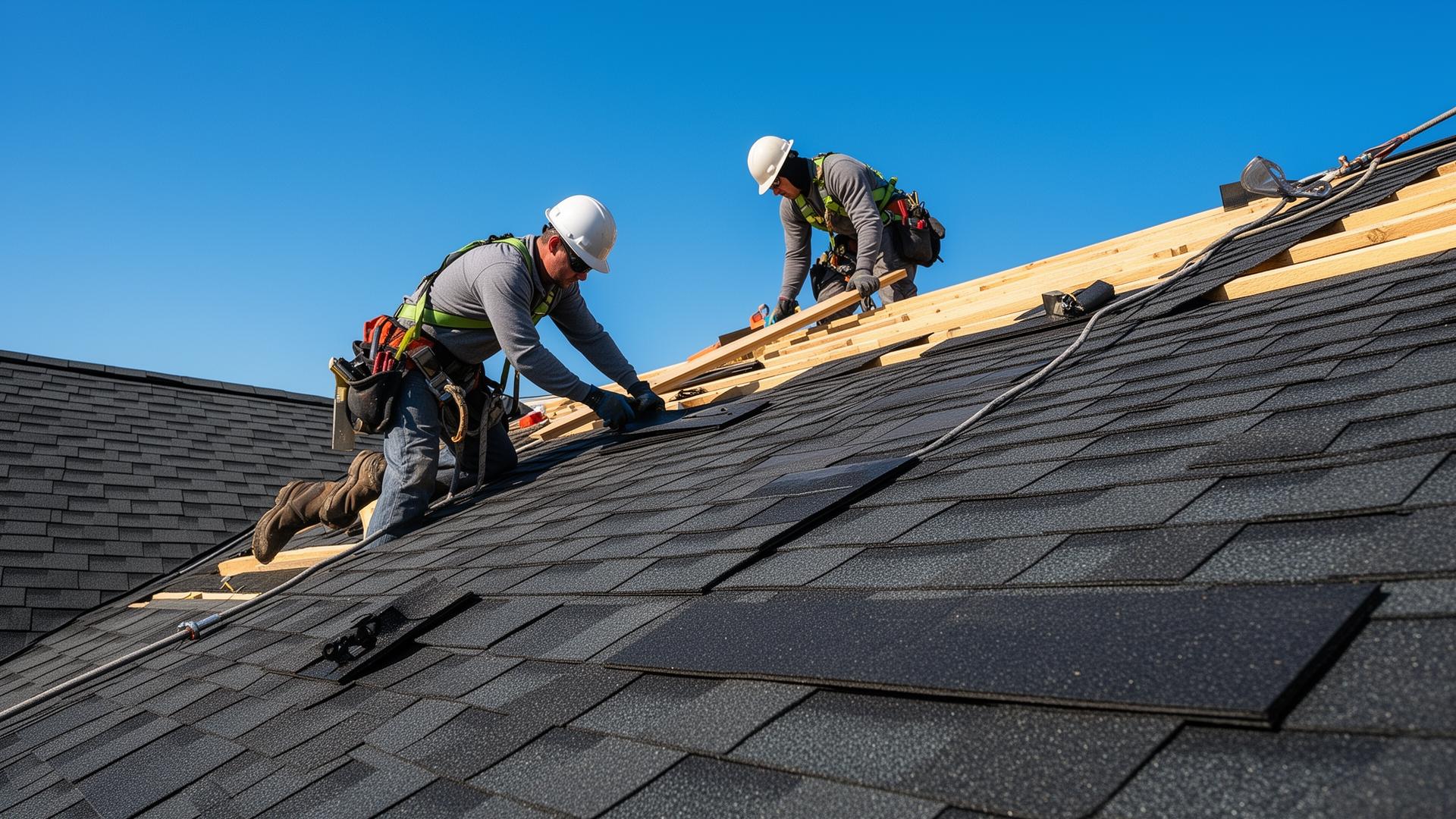
Baltimore County
Roofing Services
Tired of inflated bids and pressure to "sign today"? Get a real roof estimate in 60 seconds. Every quote includes photos of your roof and a clear line-item breakdown, built for Baltimore County weather.
No salesperson. No obligation. Call us when you're ready.
MHIC #144465Financing AvailableInstant Estimates
Our Services
What We Roof
Roof Replacement
Complete tear-off and full-system roof replacement with proper underlayment, ice & water shield, flashing, and balanced ventilation.
Read moreRoof Repair
Leak tracing, flashing rebuilds, shingle and ridge repairs — diagnosed properly with photo-backed findings before any work starts.
Read moreStorm Damage
Wind and hail damage documentation, insurance adjuster meetings, and full code-compliant restoration. Same-day emergency tarping when weather allows.
Read moreFlat Roofing
TPO, EPDM, and modified bitumen systems for porch roofs, sunrooms, garages, and full flat-roofed homes. Proper drainage detailing and seam welding.
Read moreChimney Flashing
Step and counter-flashing rebuilds, chimney crickets, and crown repair on Baltimore County's brick chimneys. The #1 source of leaks on older homes.
Read moreInspections
Photo-documented inspections for real estate transactions, annual maintenance, and post-storm assessments. Honest assessments — no manufactured urgency.
Read moreGutters
Seamless aluminum gutters in 5" and 6" K-style, leaf protection systems, and proper downspout drainage management for clay soils.
Read moreVentilation
Balanced soffit-to-ridge ventilation that extends shingle life, prevents ice dams, and reduces summer attic temperatures by 30°F or more.
Read moreEmergency Service
Same-day emergency tarping and dry-in for active leaks and storm damage. 24-hour response across Baltimore County.
Read moreRoofing Service
Roof Replacement in Baltimore County
Roof replacement is our highest-volume service in Baltimore County, and the work we put the most engineering thought into. We almost always recommend a full tear-off rather than an overlay — overlays double the deck load, hide rot and decking issues, and shorten the life of the new shingles. A tear-off lets us inspect every square foot of decking, repair what needs repair, and build the new roof as a designed system rather than a cover-up.
A proper system-built roof in Baltimore County includes deck inspection and any needed re-sheathing, synthetic underlayment over the field, ice and water shield at the eaves, valleys, and around penetrations (required for our Climate Zone 4A under code), starter course at eaves and rakes, architectural shingles, step and counter-flashing rebuilt at every roof-to-wall and chimney intersection, kick-out flashing where rakes meet sidewalls, ridge cap, and balanced soffit-to-ridge ventilation.
We install shingles from the major manufacturers — TAMKO, GAF, Owens Corning, CertainTeed, Malarkey, and Atlas — and walk homeowners through honest tradeoffs on wind rating, warranty, and aesthetic rather than steering toward one brand. Standard architectural shingles carry a 110 mph wind rating; upgraded products reach 130 mph or higher, which is worth considering on the waterfront and peninsula communities (Dundalk, Essex, Middle River) where sustained winds are part of daily weather. We always recommend architectural over 3-tab — the longevity, wind resistance, and aesthetic difference is significant for a small material upcharge.
What's Included
- Full tear-off down to the deck (no overlays unless specifically requested)
- Deck inspection and any necessary re-sheathing or repair
- Synthetic underlayment over the entire field
- Ice and water shield at eaves, valleys, and penetrations (Code Zone 4A)
- Starter course at eaves and rakes
- Architectural shingles from the brand and color you choose
- Step flashing and counter-flashing rebuilt at every wall intersection
- Kick-out flashing at rake-to-wall transitions
- New pipe boots, attic vent flashings, and ridge cap
- Balanced ventilation (intake at soffit, exhaust at ridge)
- Permit pulled and final inspection coordinated through Baltimore County
- Magnetic nail sweep and full site cleanup
Typical Timeline
Most single-family roof replacements complete in 1–2 days. Larger or more complex roofs (multiple gables, dormers, steep pitches, or extensive decking repair) typically run 3 days. We schedule around weather and clean the job site before we leave each day.
What Drives the Cost
- •Roof square footage and pitch (steeper pitches require more labor and safety setup)
- •Tear-off layer count (one layer of shingles vs two)
- •Deck condition (re-sheathing adds material and labor)
- •Shingle line and warranty tier (standard architectural vs upgraded high-wind/impact-rated)
- •Number of penetrations, valleys, and wall intersections (flashing complexity)
- •Ventilation upgrades (adding ridge vent or correcting intake)
- •Skylights, chimneys, or other features requiring custom flashing
Considerations for Baltimore County Homes
Baltimore County's Climate Zone 4A code requires ice and water shield at eaves on every replacement. The county also requires a permit for full roof replacements — we pull it as part of the project. On older brick homes (Towson, Catonsville, Pikesville), chimney flashing rebuilds are almost always required during a re-roof; on waterfront and peninsula homes, upgraded high-wind shingles and corrosion-resistant fasteners are worth the upcharge.
Roof Replacement FAQs
Roofing Service
Roof Repair in Baltimore County
Most roof leaks aren't where the water shows up inside the house. Water travels along the underside of the deck, runs down rafters, and shows up on the ceiling several feet from the actual entry point. Repairing a roof properly starts with tracing the leak back to its real source — a failed flashing, a worn valley, a ridge cap blow-off, a nail pop, a cracked pipe boot, or a chimney that needs counter-flashing rebuilt.
The most common repair scenarios in Baltimore County:
Step flashing failure on brick chimneys is the single most frequent leak source on the older housing stock in Towson, Catonsville, Pikesville, Lutherville-Timonium, and Reisterstown. When step flashing was originally surface-mounted with sealant rather than reglet-cut into mortar joints, it eventually fails — and the only proper fix is to remove the existing flashing and rebuild it correctly.
Missing or damaged kick-out flashing at roof-to-wall intersections sends water behind siding, where it can rot the sheathing for years before showing up inside. Valley wear shows up as granule loss and exposed mat down the centerline of cross-gable roofs. Ridge cap blow-off is common after summer wind events and on roofs where the original cap was face-nailed without sealant.
We diagnose every repair with photos so you can see exactly what we found and what we're recommending — no "trust us, it needs work." If the right answer is "this can be repaired and you've got 5–8 more years," we'll tell you. If the right answer is "you've got three failed flashings and the deck is soft in two places — this is a replacement conversation," we'll tell you that too.
What's Included
- On-site leak tracing — finding the actual entry point, not just the visible damage
- Photo-documented findings shared with you before any work begins
- Flashing rebuilds (step, counter, kick-out, valley) with proper detailing
- Shingle replacement matched to existing color and profile where possible
- Pipe boot, attic vent, and penetration flashing replacement
- Ridge cap rebuilds where blow-off has occurred
- Nail-pop sealing and reseating of lifted shingles
- Decking repair where rot has reached the sheathing
- Honest read on whether repair is the right call vs replacement
Typical Timeline
Most repair calls are completed in a single visit — a few hours to half a day. Larger repairs (chimney flashing rebuilds, valley replacements, multiple penetrations) typically take a full day. Emergency tarping for active leaks is same-day when weather allows.
What Drives the Cost
- •Scope of the repair (single shingle vs full flashing rebuild vs valley)
- •Roof access and pitch (steep roofs require more setup)
- •Whether decking repair is needed under the affected area
- •Material match availability for older shingle profiles
- •Whether a temporary tarp/dry-in is needed before permanent repair
Considerations for Baltimore County Homes
On pre-war brick homes — common in Towson, Catonsville, and along Frederick Road in Catonsville — chimney flashing is almost always the first place to look when a leak shows up near an interior wall. On 1980s–2000s suburban homes (Perry Hall, Owings Mills, White Marsh), kick-out flashing is the most common missing detail. Both are fixable, neither is "just replace the shingles" work.
Roof Repair FAQs
Roofing Service
Storm Damage & Insurance Claims in Baltimore County
Storm damage is one of the most stressful situations a homeowner deals with — there's an active leak, an insurance company asking questions, and out-of-state "storm chasers" knocking on the door promising a free roof. We do this work year-round in Baltimore County and know how to walk you through it without the high-pressure tactics.
The documentation matters more than anything. We photograph the damage from the ground, on the roof, and in the attic; measure and map every impact mark; and produce a damage report your insurance adjuster can actually work with. We meet adjusters on-site, walk the roof together, and advocate for full scope restoration to current code rather than letting the claim get short-changed with a partial-slope repair that doesn't address the real damage.
Common Baltimore County storm scenarios: summer thunderstorms with straight-line winds and hail (most frequent), winter nor'easters with sustained wind and wet snow loading, and remnants from tropical systems tracking up the Atlantic coast. We've handled hundreds of claims across all three.
A few things to do immediately after a storm: photograph the visible damage from the ground, save any debris that fell in the yard, call your insurance company to start the claim, and call a local licensed contractor for an independent inspection. Do not sign anything with a contractor who knocks on your door uninvited — those crews are usually out-of-state, gone within the season, and unreachable when warranty issues come up two years later. We're here year-round.
What's Included
- Same-day emergency tarping/dry-in when weather allows
- Photo and measurement documentation of all damage
- Detailed damage report formatted for insurance adjusters
- On-site meeting with your adjuster — we walk the roof together
- Advocacy for full scope restoration, including supplement claims when warranted
- Code-compliant restoration (ice and water shield, drip edge, ventilation as required)
- Coordination with your insurance company through the entire claim process
- Help understanding deductibles, recoverable depreciation, and the claim payment timeline
Typical Timeline
Emergency tarping: same-day when safe to access. Damage documentation and adjuster meeting: typically within 1–2 weeks of first call. Full restoration timing depends on insurance approval and material availability — usually 4–8 weeks from claim approval to job completion.
What Drives the Cost
- •Scope of approved insurance claim (typically the homeowner's deductible plus any non-covered upgrades)
- •Whether code upgrades are required and covered (ice and water shield, ventilation)
- •Material upgrades chosen by the homeowner above insurance scope
- •Supplement scope items discovered during tear-off
Considerations for Baltimore County Homes
Baltimore County sees both wind and hail damage, but wind is the more common loss type. Insurance adjusters often try to scope partial-slope repairs after wind events; our job is to demonstrate when full-slope replacement is the only correct repair (color matching of weathered shingles, sealant strip integrity, etc.). We've worked with most of the major Maryland and national carriers.
Storm Damage FAQs
Roofing Service
Flat & Low-Slope Roofing in Baltimore County
Flat and low-slope roofing is a different trade than pitched-roof shingle work. The systems are different, the failure modes are different, and the detailing matters more — there's no pitch to shed water if a seam fails, so every lap weld and every drain detail has to be right the first time.
We install three main system types in Baltimore County: TPO (thermoplastic polyolefin) is the most common modern choice for residential flat roofs — heat-welded seams, white reflective surface to reduce summer heat load, typically 20–25 year service life. EPDM (rubber) is the long-proven option — adhered seams, black surface, 25–30 year life when installed correctly. Modified bitumen comes in torch-down and self-adhered options and is still common on older flat-roofed homes; we install it where the homeowner prefers a like-for-like replacement.
Where flat roofing applies in Baltimore County: porch roofs over front and side entries (very common), sunroom and breezeway additions, detached garages with shed roofs, and full flat-roofed homes — including some mid-century modernist homes in Pikesville and the Towson area, and some flat-roofed townhome rear sections.
The single biggest enemy of any flat roof is standing water. Proper drainage design — adequate slope to drains or scuppers, oversized downspouts, and clean tie-ins to gutters or rain leaders — is what determines whether the system reaches its expected life or fails at year 10. We design and install for drainage first, then membrane second.
What's Included
- Tear-off of existing flat-roof system down to the deck
- Deck inspection and any needed re-sheathing
- Insulation and/or recovery board where called for
- TPO, EPDM, or modified bitumen membrane (homeowner's choice)
- Heat-welded or adhered seams per system specification
- Drainage detailing — drains, scuppers, downspouts, and gutter tie-ins
- Flashing at all penetrations, parapet walls, and roof-to-wall transitions
- Edge metal and termination bar where required
- Manufacturer warranty registration
Typical Timeline
Small flat roofs (porch, garage, single-room addition): typically 1 day. Larger flat roofs or full flat-roofed homes: 2–4 days depending on size and complexity. Tear-offs of multi-layer modified bitumen take longer than newer single-ply replacements.
What Drives the Cost
- •Square footage and roof access
- •Number of existing layers being torn off
- •Deck condition and any required re-sheathing
- •Insulation thickness and recovery board if specified
- •Membrane system chosen (TPO, EPDM, mod bit)
- •Number of penetrations, drains, and parapet flashings
Considerations for Baltimore County Homes
Many flat roofs in Baltimore County were originally built with inadequate slope to drains. During replacement, we evaluate whether tapered insulation or drain repositioning would extend the new system's life — and whether the cost is justified. On porch roofs and additions where the original flat roof was built without proper tie-in to the main roof's gutters, we redesign the drainage path as part of the project.
Flat Roofing FAQs
Roofing Service
Chimney Flashing & Chimney Repair in Baltimore County
Chimney flashing is the single most common source of roof leaks on Baltimore County's older brick housing stock — especially the pre-war colonials, Cape Cods, and bungalows in Towson, Catonsville, Pikesville, Arbutus, and along the older arteries of Reisterstown and Lutherville-Timonium. When chimneys were originally flashed, the standard practice was often to install step flashing and then surface-mount counter-flashing with sealant. Sealant fails. Within 10–20 years, water finds its way behind the flashing and into the wall cavity, where it shows up as a stain on a ceiling several feet from the chimney.
The right way to flash a chimney is step flashing woven into each shingle course and counter-flashing reglet-cut into the mortar joints — meaning we cut a horizontal kerf into the brick joint, slip the counter-flashing into it, and seal with a flexible sealant. That's permanent. It's the difference between a 5-year leak repair and a 30-year solution.
On wider chimneys (more than about 30 inches across the uphill side), we install a cricket — a small peaked structure on the uphill side that diverts water around the chimney rather than letting it pool against the back face. Code-required for chimneys over 30" wide; smart practice on slightly narrower ones too.
We also handle chimney crown repair (the concrete or mortar cap on top of the brick), brick repointing where mortar has eroded around the flashing area, and full chimney flashing rebuilds as part of roof replacements. If your roof is aging and the chimney flashing is original, doing both together is the right call — saves on access, ensures the flashing integrates with the new roof system, and prevents a leak appearing two years after the new roof goes on.
What's Included
- Removal of existing flashing and inspection of underlying brick condition
- Step flashing woven into shingle courses on the uphill, downhill, and side faces
- Counter-flashing reglet-cut into mortar joints (the permanent way)
- Cricket installation on the uphill side of wide chimneys (>30" wide)
- Chimney crown inspection and repair where needed
- Brick repointing in the flashing area when mortar is failing
- Full integration with the surrounding roof system
- Photo documentation before, during, and after
Typical Timeline
Standalone chimney flashing rebuild: typically 1 day. As part of a full roof replacement: integrated into the project schedule with no added timeline. Cricket installation adds a few hours.
What Drives the Cost
- •Chimney size and complexity (single brick chimney vs wide masonry chimney)
- •Whether a cricket is required
- •Crown condition and any brick repointing needed
- •Roof access and pitch
- •Whether the work is standalone or part of a roof replacement
Considerations for Baltimore County Homes
Baltimore County's pre-war brick housing stock — especially anything built before 1960 — almost universally has original chimney flashing that's now well past its service life. If your home is from this era and you've ever seen a stain near the chimney on a ceiling or upper-floor wall, the chimney flashing is the first thing to check. Surface-mounted counter-flashing held with sealant is not a permanent repair — reglet-cut is.
Chimney Flashing FAQs
Roofing Service
Roof Inspections in Baltimore County
We do three main types of roof inspections in Baltimore County: real estate transaction inspections (pre-purchase or pre-listing), annual or biennial maintenance inspections on aging roofs, and post-storm inspections after wind or hail events.
A proper inspection covers more than the visible shingle surface. We check shingle condition and granule loss across all slopes, flashing integrity at every penetration and wall intersection, valley condition, ridge cap, pipe boots, attic vent flashings, drip edge, gutter tie-in, and the deck condition from the attic — looking for nail patterns, daylight, sag, and signs of moisture intrusion. We also evaluate attic ventilation, which is one of the biggest predictors of remaining roof life.
Every inspection comes with photos. You see exactly what we saw, with notes on what's normal wear, what needs attention now, and what's worth watching at next year's inspection. If your roof has 10 good years left, we'll tell you. We don't sell roofs that aren't needed — building a 25-year reputation matters more than a one-time sale.
Real estate inspections typically include a written report formatted for the transaction. Post-storm inspections often tie into a potential insurance claim and are no-cost in most cases. Annual maintenance inspections on roofs over 12 years old are smart insurance — catching a failing flashing in summer is much cheaper than dealing with a winter leak.
What's Included
- Walk every accessible slope (or drone-assisted on very steep roofs)
- Inspect flashing at every penetration, wall intersection, and chimney
- Evaluate valley wear, ridge cap condition, and field shingle integrity
- Check pipe boots, attic vents, and gutter tie-ins
- Attic inspection: deck condition, daylight, ventilation adequacy, moisture signs
- Photo documentation of findings — what's normal, what needs work, what to watch
- Written summary suitable for real estate transactions when needed
- Honest assessment of remaining roof life
Typical Timeline
Most inspections are completed in 1–2 hours on-site, with the photo report delivered within 1–2 business days. Real estate inspections with a formal written report take longer to deliver. Post-storm inspections are typically same-week.
What Drives the Cost
- •Roof complexity (single gable vs multi-gable with dormers and complex valleys)
- •Whether a written report is needed for a real estate transaction
- •Post-storm inspections tied to potential insurance claims are typically no-cost
Considerations for Baltimore County Homes
On Baltimore County's older brick homes, we always inspect chimney flashing first — it's the most common failure point. On 1990s–2000s suburban homes (Owings Mills, White Marsh, Perry Hall, Nottingham), we focus on attic ventilation and ridge cap condition since those are the most common shortcomings of that era's construction. Townhome inspections require coordination with adjacent units; we handle this when we work in cluster housing.
Inspections FAQs
Roofing Service
Gutter Installation & Leaf Protection in Baltimore County
Gutters do more than catch rainwater off the roof — they protect the foundation, the siding, the landscaping, and (in Baltimore County's clay-heavy soils) the basement. A roof can be perfect, and water pouring off the eaves into the soil 6 inches from the foundation will still cause problems. Gutters are part of the roof system, not an afterthought.
We install seamless aluminum gutters formed on-site with a continuous coil, custom-cut to the exact length of each run. Seamless beats sectional because the only joints are at corners and downspout outlets — not every 10 feet — which means dramatically fewer failure points. Standard 5-inch K-style is the right size for most Baltimore County homes. We upsize to 6-inch on larger roof areas, on homes under heavy mature tree canopy (Towson, Catonsville, Pikesville), and where the existing gutters have a history of overflowing during summer thunderstorms.
Leaf protection matters in established Baltimore County neighborhoods. Under mature oak and maple coverage, ungated gutters fill within weeks every fall. We install micro-mesh, screen, and reverse-curve systems depending on the homeowner's preference and the debris load — micro-mesh is the most reliable under heavy debris and handles oak catkins and pine needles that defeat lighter systems.
Downspout placement and drainage are where most gutter installs fail at the planning stage. Downspouts that dump water 6 inches from the foundation into clay soil are causing slow, steady damage to the foundation and basement. We extend downspouts at least 4–6 feet from the foundation with rigid extensions or buried drain lines to daylight or a dry well — it's the single most cost-effective foundation protection any homeowner can do.
What's Included
- On-site formed seamless aluminum gutters (no factory sectional pieces)
- 5" or 6" K-style sized for the roof area and tree-debris load
- Color-matched to existing trim from a wide selection
- Hidden hangers at proper spacing for snow load
- Proper pitch toward downspouts (typically ¼" per 10 linear feet)
- Downspout placement with extensions at least 4–6 feet from the foundation
- Leaf protection systems (micro-mesh, screen, or reverse-curve) when selected
- Integration with the roof drip edge and starter course
- Removal and disposal of old gutters
Typical Timeline
Most single-family gutter replacements complete in 1 day. Larger or more complex homes (multiple roof planes, second-story runs) sometimes run into a second day. Leaf protection installation on existing gutters is typically a few hours.
What Drives the Cost
- •Linear footage of gutter and number of downspouts
- •5" vs 6" K-style
- •Number of stories and access
- •Leaf protection selection (no guards vs basic screen vs micro-mesh)
- •Downspout extensions and any buried drain lines
- •Removal of existing gutters and downspouts
Considerations for Baltimore County Homes
In Baltimore County, downspout extensions are not optional — clay soils don't absorb water quickly, and water pooling against the foundation will eventually find a way into the basement. Even a basic 4-foot rigid extension on each downspout makes a measurable difference. In older neighborhoods with mature trees, micro-mesh leaf protection pays for itself in not having to climb a ladder twice a year.
Gutters FAQs
Roofing Service
Attic Ventilation & Ridge Vent Installation in Baltimore County
Attic ventilation is the single most under-appreciated factor in roof longevity. A roof with poor ventilation will age 5–10 years faster than the same roof with proper balanced ventilation, regardless of how good the shingles are. In Baltimore County's humid summers and freeze/thaw winters, this matters even more — superheated attics in July destroy shingles from underneath, and warm humid attics in January feed ice dams at the eaves.
Proper ventilation is balanced: intake at the soffit (where outside air enters the attic from below), exhaust at the ridge (where heated air escapes from the top). The two work as a system. Ridge vent without enough soffit intake doesn't work. Soffit intake without ridge exhaust doesn't work. Both have to be sized correctly for the attic volume.
Signs your roof has poor ventilation: premature shingle aging (curling, cupping, cracking before 15 years), recurring ice dams at the eaves in winter, attic temperatures above 130°F in summer, mold or condensation visible in the attic, and frost on roofing nails inside the attic in winter. Any of these means the system is unbalanced.
The best time to fix attic ventilation is during a roof replacement — we can install ridge vent in the same day as the new shingles, and add or correct soffit intake from the eaves. Retrofit ventilation on an existing roof is also possible: we cut a ridge slot, install ridge vent, and add soffit baffles or new soffit vents as needed. The cost is modest compared to the difference it makes in shingle life.
What's Included
- Attic inspection and ventilation assessment (intake vs exhaust calculation)
- Ridge vent installation (slot cut, vent installed, ridge cap shingles over)
- Soffit vent installation or correction where intake is inadequate
- Soffit baffles in the attic to keep intake airflow clear of insulation
- Removal of inadequate or counterproductive vents (e.g., box vents that short-circuit ridge airflow)
- Documentation of the corrected airflow path
Typical Timeline
When done as part of a roof replacement: integrated into the project with no added schedule. Standalone ridge vent installation: typically half a day to 1 day depending on roof length. Adding or correcting soffit intake: a few hours to a full day depending on access and existing conditions.
What Drives the Cost
- •Length of ridge to vent
- •Whether soffit intake also needs work
- •Removal of existing inadequate venting
- •Whether baffles need to be added in the attic
- •Whether the work is standalone or part of a roof replacement
Considerations for Baltimore County Homes
Many 1950s–1970s ranchers and split-levels in Parkville, Randallstown, and parts of Catonsville were built with minimal soffit venting and gable-end vents only. This setup short-circuits airflow — air enters one gable, exits the other, and skips the actual roof deck where it's needed. Adding ridge vent and proper soffit intake transforms ventilation in these homes and meaningfully extends roof life.
Ventilation FAQs
Roofing Service
Emergency Roof Services in Baltimore County
When a storm tears off shingles or a sudden leak shows up during heavy rain, the priority is stopping further damage to the interior — not figuring out the permanent repair right now. We respond same-day to emergency calls across Baltimore County when weather allows, install temporary tarping or dry-in over the affected area, and schedule the permanent repair or replacement once the situation is stabilized.
Same-day emergency tarping protects the interior — drywall, insulation, framing, flooring — while you and your insurance company work through the claim process. A properly installed tarp lasts several weeks if needed, securely fastened with battens (not just bricks holding it down) so it doesn't blow off in the next storm.
While you're waiting for us to arrive: place buckets or large containers under any active interior leaks, move valuables and electronics out of the affected area, turn off power to any room with active water near outlets or fixtures, and photograph the damage for your insurance company. Don't go up on the roof yourself — wet shingles and storm-damaged roofs are extremely dangerous, and the documentation we gather during emergency response feeds directly into the insurance claim.
We also handle non-storm emergency calls — sudden leaks, fallen tree damage, animal damage, and any situation where the interior is at active risk. The goal is always stop-the-bleeding first, then permanent repair on a planned schedule.
What's Included
- Same-day response across Baltimore County when weather allows
- Emergency tarping with battens (secure, not blow-off bricks)
- Dry-in over storm-damaged sections to protect the deck and interior
- Photo documentation of damage for your insurance claim
- Coordination with your insurance company for the permanent repair
- Scheduling of the permanent repair or replacement
Typical Timeline
Emergency tarping: typically same-day when weather allows safe roof access. Permanent repair scheduling: depends on insurance approval and material availability — usually 2–8 weeks from initial call.
What Drives the Cost
- •Most emergency tarping tied to a subsequent insurance-funded repair is no-cost
- •Standalone emergency tarping (no follow-on project) is a flat call-out fee
- •Permanent repair cost is separate and quoted after damage assessment
Considerations for Baltimore County Homes
Severe weather events that hit Baltimore County hardest — summer thunderstorms with straight-line winds, winter ice storms, and remnants of tropical systems — typically generate a high volume of emergency calls in the same 24–48 hour window. We prioritize active interior leaks first, then visible storm damage with no interior water yet, then planned inspections.
Emergency Service FAQs
Not Sure What Your Roof Needs? Start With a Free Inspection
Photo-backed findings, honest assessment of remaining roof life, and clear next steps — whether that's a repair, a replacement, or no work at all right now.
Why Choose Us
Our Promise to You
Licensed & Insured — MHIC# 144465
Maryland Home Improvement Contractor License with full liability and workers' compensation coverage on every project. License and insurance certificates available on request.
1,200+ Roofs Completed in Baltimore County
We've worked on every type of housing stock in the county — pre-war brick, mid-century rancher, 1990s tract, modern townhome. We know what each era's construction needs and where it typically fails.
Unbiased Shingle Recommendations
We install from all the major manufacturers — TAMKO, GAF, Owens Corning, CertainTeed, Malarkey, Atlas — and help you pick the right product for your home, exposure, and budget rather than the brand with the best contractor incentive.
Photo-Backed Inspections & Transparent Pricing
Every inspection comes with photos so you see exactly what we found. Every proposal is line-item, not a single vague number. No surprise change orders for known conditions.
Full-System Installations
Not just shingles. Every replacement includes proper underlayment, ice and water shield to code, flashing rebuilds at every penetration, balanced ventilation, and ridge cap — installed as a system designed to reach its full warranty life.
Same-Day Emergency Response
Active leak or storm damage? We respond same-day across Baltimore County when weather allows. Emergency tarping protects your interior while the permanent repair is scheduled.
Clean Job Sites & Respectful Crews
Tarps over landscaping, magnetic nail sweep before we leave each day, daily debris cleanup, and dumpster placement that doesn't kill your lawn. We treat your property like we'd want ours treated.
Up to 30-Year Warranties
Manufacturer product warranties up to 30+ years on the shingles, paired with our workmanship warranty on the installation. Both documented in writing at project close-out.
Local Expertise
Baltimore County Climate & Roof Wear
Roofs in Baltimore County take more weather abuse than almost any other component of a home. Climate Zone 4A means humid summers, freeze/thaw winters, and storm exposure ranging from summer hail to winter nor'easters. Here's what we plan for on every roof we build — and why local experience matters.
Freeze/Thaw & Ice Dams
Baltimore County typically sees 30–50 freeze/thaw cycles each winter. Combined with poor attic ventilation, this is what creates ice dams at the eaves — which is why ice and water shield at eaves is required by code in our Climate Zone 4A.
Summer Heat & UV
Roof surface temperatures can exceed 160°F on dark shingles in July. South and west-facing slopes age faster than north and east — typically by 3–5 years over the life of a roof. Proper attic ventilation reduces shingle temperature significantly.
Wind Exposure (Geography Matters)
Waterfront and peninsula communities — Dundalk, Essex, Middle River — see sustained winds that warrant upgraded high-wind shingles (130 mph+) and 6-nail patterns. Inland established suburbs sit more protected and standard 110 mph products perform well.
Storm Exposure
Summer thunderstorms with straight-line wind and hail, winter nor'easters with sustained wind and wet snow, and occasional remnants from tropical systems tracking up the Atlantic coast. We document storm damage and work with insurance carriers year-round.
Mature Tree Canopy
Established suburbs (Towson, Catonsville, Pikesville, Lutherville-Timonium, Reisterstown) sit under heavy oak and maple coverage. Debris load on gutters, shaded north slopes that grow algae, and impact damage from falling limbs are real planning factors.
Housing Age Mix
Pre-war brick colonials and bungalows in the older suburbs need different detailing (chimney flashing, complex valleys) than 1990s–2000s tract housing in Owings Mills, White Marsh, or Perry Hall (where ridge ventilation and kick-out flashing are usually the gaps).
Waterfront communities like Dundalk, Essex, and Middle River see higher storm-damage frequency, and after major storms many homeowners need both roofing and exterior remodeling work (siding, gutters, fascia, soffit). We scope and schedule the full project under one contract and one project lead.
What to Expect
Our Roofing Process
-
1
Free photo-backed inspection
We walk every accessible slope, inspect flashing and penetrations, check the attic for ventilation and deck condition, and document everything with photos you'll see in the proposal.
-
2
Detailed estimate with Good/Better/Best options
Line-item proposal with three shingle tiers so you can see the cost difference between standard architectural, upgraded high-wind, and premium impact-rated options. No vague single-number bids.
-
3
Material selection & color samples
We bring physical color samples to your home so you can see the shingles against your siding and trim in actual daylight — not just on a printed chart.
-
4
Permit pull & schedule confirmation
We pull the Baltimore County permit, confirm your install date in writing, and walk you through what to expect on the day of the work.
-
5
Day-of setup & site protection
Materials delivered to the driveway, dump trailer staged, landscaping covered with tarps, and walkways protected. We treat your property like our own.
-
6
System installation with checkpoints
Tear-off, deck inspection, underlayment, ice and water shield, starter, shingles, flashing rebuilds, ridge cap, and ventilation — installed as an integrated system, not a stack of layers.
-
7
Clean-up & final walkthrough
Magnetic nail sweep across the entire property, debris hauled away, final photo documentation of the completed roof, and warranty paperwork delivered in person.
Local Coverage
Roofing Services Across Baltimore County
Licensed crews and the same local service for every community in Baltimore County — roof replacement, repair, storm damage, and inspections. Request a free inspection and we'll respond within 24 hours.
Local Coverage
We Serve All of Baltimore County
Towson
On Rodgers Forge and Stoneleigh rowhomes, the leak you can't trace is almost al…
Catonsville
Heavy oak canopy and limestone-filler shingles produce the streaked, prematurel…
Parkville
Most 1940s-60s ramblers and Cape Cods were built without continuous ridge venti…
Perry Hall
Cross-gabled colonials in Honeygo and Perry Hall Farms have so many roof-to-wal…
Dundalk
Sustained Patapsco wind exposure on Turners Station and St. Helena blocks is wh…
Essex
Back River humidity and aggressive ice damming on north slopes drive water unde…
Lutherville-Timonium
Larger custom homes with complex rooflines, multiple valleys, and tall chimneys…
Pikesville
Mature canopy across Sudbrook and Old Pikesville plus a mix of pre-war stone ho…
Owings Mills
Planned-community HOAs and matching color requirements make Owings Mills replac…
Randallstown
Mid-century ranchers and 1970s splits across Randallstown share the same weak p…
Middle River
Open waterfront exposure and 1950s post-war framing mean wind-rated assemblies…
Reisterstown
Historic Main Street homes and newer surrounding subdivisions need very differe…
White Marsh
Most 1990s-2000s tract homes in White Marsh came with builder-grade 3-tab and m…
Nottingham
Townhome clusters in Nottingham require coordinated tear-offs and matched shing…
Arbutus
Bungalows near UMBC have steep pitches, old step flashing into brick chimneys,…
Common Questions
Roofing FAQs
Permit-related questions? See the Baltimore County Department of Permits, Approvals and Inspections.